GoMRI eNews · Sep 1, 2020 · ← All issues
Welcome to the GoMRI eNews.

Keeping you current on emerging Gulf science and the people investigating the effects of oil spills on the environment and public health.

September 1, 2020                                                                    GoMRI eNews

Stories

Now Available! Middle School Science Curriculum Highlights Ocean Modeling

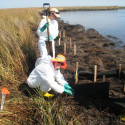
Studies Explore the Dynamics of How Offshore Oil Spills Affect Coastal Environments

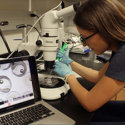
Laboratory Studies Examine How Oil Spills Affect Physical and Behavioral Aspects of Gulf Fish

From the Archives

Eight-Year Study Quantifies How Oiling is a Continuing Stressor on the Marsh Ecosystem

Posted on August 29, 2019
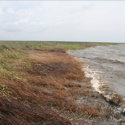
Scientists measured changes in oil quantity and quality in 1,200+ samples collected over eight years at locations that Deepwater Horizon affected – the Gulf of Mexico continental shelf, estuarine waters, and marsh sediments.

Study Finds Hurricane Isaac Prolonged Oil Spill Impacts on Some Marsh Insects and Spiders

Posted on August 30, 2018
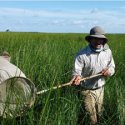
Researchers collected and analyzed terrestrial arthropods from Louisiana marshes to determine the combined effects from Deepwater Horizon and Hurricane Isaac on saltmarsh ecosystems. The initial oiling from the spill (2010) followed by the oil’s redistribution during Hurricane Isaac (2012) negatively affected some arthropod groups three-four years after the spill.

Grad Student Malone Uses Engineering Skills to Put Pressure on Oil

Posted on August 24, 2017
The 2010 Deepwater Horizon incident highlighted new challenges and science gaps in our understanding of and ability to respond to deep-water oil releases. Of particular importance is how highly pressurized oil and gas behaves in a deep-sea environment.

Rapid Response Study Characterizes Behaviors of Accidental Short-Term Oil Blowouts

Posted on August 26, 2016
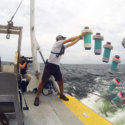
An interdisciplinary scientific team conducted a rapid response sampling campaign in the immediate aftermath of the 2013 Hercules 265 blowout to determine if sediment and fish were polluted above established baseline levels.

Publications

Study Examines Cross-Shore Transport of Gulf of Mexico Surface Material
On the transport and landfall of marine oil spills, laboratory and field observations. Novelli, G.; Guigand, C.M.; Boufadel, M.C.; Ozgokmen, T.M. 2020. Marine Pollution Bulletin, 150, 110805.
 
Study Investigates How Bubble Size Influences the Integral Behavior of Bubble Plumes
Impact of bubble size on the integral characteristics of bubble plumes in quiescent and unstratified water. Li, G.; Wang, B.; Wu, H.; DiMarco, S.F. 2020. International Journal of Multiphase Flow, 125, 103230.

Data

Moderate Resolution Imaging Spectroradiometer (MODIS)-derived color index (CI), frontal density, and sea surface temperature (SST) in the Gulf of Mexico between 2016-01-01 and 2018-12-31 -- data link

GoMix II mooring data, northern Gulf of Mexico, R/V Point Sure (PS18_06), 2017-08-18 - 2018-03-03 -- data link

Dataset for: Bacterial motility enhances adhesion to oil droplets -- data link

Announcements

Sea Grant Releases Tip Sheet for Oil Spill Researchers
The fact sheet, titled “What to Expect in Response to an Oil Spill: A Tip Sheet for Academic Researchers,” was developed by the Sea Grant Oil Spill Outreach team based on requests from researchers and the response community. It contains pointers for scientists interested in learning more about oil spill research needs and the possibilities of conducting research during active spills. It is available online at: http://masgc.org/oilscience/academia-response-tip-sheet.pdf.
 
Upcoming Webinars Hosted by the Sea Grant Oil Spill Outreach Team