GoMRI eNews · Jul 7, 2020 · ← All issues
Welcome to the GoMRI eNews.

Keeping you current on emerging Gulf science and the people investigating the effects of oil spills on the environment and public health.

July 7, 2020                                                                    GoMRI eNews

Stories

Grad Student Pandya Investigates How Wind and Waves Influence Airborne Transport of Oil

Studies Assess Gulf of Mexico Fish Tissue Following Deepwater Horizon

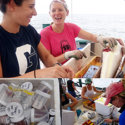
ECOGIG Research Informs Development of Ocean-Based Video Game: Beyond Blue

On Wednesday, June 10th, GoMRI leadership stood in solidarity with #ShutDownSTEM. GoMRI fully acknowledges that Black Lives Matter and changes need to be made in the scientific community, and we will work with our communities to eliminate racism from scientific research. We stand behind the recent statements made by AAAS and our partner organizations.

From the Archives

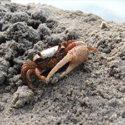
Study Finds Oil Impacts on Fiddler Crabs May Also Affect Broader Marsh Health

Posted on July 2, 2019
Scientists conducted mesocosm experiments to explore how crude oil affects marsh-dwelling fiddler crabs, classified as ecosystem engineers or bioturbators. The researchers tested impacts of various oil concentrations to mimic light (L) to heavy (H) oiling scenarios, with fiddler crabs experiencing more acute impacts at higher oil concentrations and less at lower concentrations.


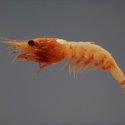
Study Evaluates Short-Term Oil Toxicity in Deep-Sea Crustaceans

Posted on June 26, 2018
Researchers conducted 48-hour toxicity experiments on deep ocean crustaceans (200 – 1000 m depth) to determine the impact threshold levels for one polycyclic aromatic hydrocarbon (PAH, 1-methylnaphthalene) under various environmental conditions.

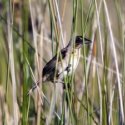
Study Identifies Oil Carbons Associated with Deepwater Horizon in Terrestrial Birds

Posted on June 27, 2017
Scientists analyzed the carbon composition in Seaside Sparrow tissues to learn if oil from the 2010 spill was incorporated into the terrestrial food web. The researchers found reduced radiocarbon and stable carbon concentration levels in the feathers of birds captured at oiled sites compared with birds from non-oiled sites, which is consistent with a fossil oil source.

Identifying Effective, Food-Grade Dispersants for the Future

Posted on July 5, 2016
Oil spill responders currently have the option to treat oil spills with a synthetic dispersant called Corexit, however scientists continue to search for alternatives. In this search, scientists seek to develop an understanding of the specific mechanisms that drive dispersion and identify an effective combination of food-grade components.

Publications

Study Tests How Solvents Affect Dispersion Efficiency of Oil
Does the Solvent in a Dispersant Impact the Efficiency of Crude-Oil Dispersion?Fernandes, J.C.; Agrawal, N.R.; Aljirafi, F.O.; Bothun, G.D.; McCormick, A.V.; John, V.T.; Raghavan, S.R. Langmuir 2019, 35, 50, 16630–16639 

Study Tracks How Upwelling and Downwelling Affect Transport in Mobile Bay
Effects of Coastal Upwelling and Downwelling on Hydrographic Variability and Dissolved Oxygen in Mobile Bay. Coogan, J.; Dzwonkowski, B.; Lehrter  Journal of Geophysical Research: Oceans, 2019 124, 791– 806.

Data

Dataset for: A ribosomal sequence-based oil sensitivity index for phytoplankton groups -- data link

Potential impacts of ocean acidification on diatom aggregation when exposed to crude oil and chemical dispersants -- data link

Presence/absence and density data for epipelagic tows from 47 stations collected aboard R/V Pelican cruise PE18-01 (LF2017A) in the northern Gulf of Mexico from 2017-07-01 to 2017-07-04 -- data link

Announcements

Upcoming Webinars with Sea Grant Oil Spill Outreach Team