GoMRI eNews · Apr 28, 2020 · ← All issues
Welcome to the GoMRI eNews.

Keeping you current on emerging Gulf science and the people investigating the effects of oil spills on the environment and public health.

April 28, 2020                                                                    GoMRI eNews

Stories

Marine Mammal Researchers Chronicle a Decade of Assessments Since Deepwater Horizon

Scientists Share Personal Experiences with Deepwater Horizon Research

Scientists Reflect on a Decade of Oil Spill Research following Deepwater Horizon

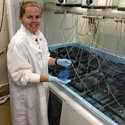
Grad Student Schwaab Investigates How Tuna and Billfish Respond to Oil

Scientists Describe Breakthroughs in Genomic Techniques Since Deepwater Horizon

From the Archives

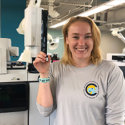
Grad Student Jasperse Examines Oil Spill Effects on Marsh Fish and Dolphins

Posted on April 18, 2019
Following Deepwater Horizon, researchers have been conducting multi-year studies on the health of Gulf of Mexico marine life.

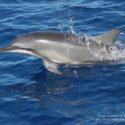
Study Uses Big-Data Approach to Identify Distinct Dolphin “Clicks” in Acoustic Recordings

Posted on April 10, 2018
Researchers designed an automated network-based classification method to process large acoustic datasets and identify distinct dolphin click types without requiring prior knowledge of their distinguishing features. The method identified seven click types from over 50 million echolocation clicks recorded in the Gulf of Mexico – six clicks of unknown origin and one click belonging to the Risso’s dolphin species.

Oceanography Highlights Findings from Deepwater Horizon Research

Posted on April 20, 2017
7th year of the largest coordinated research endeavor around an ocean event.

Publications

Study Finds Mucus is a Promising Source for Noninvasive Fish Assessment of Oil Exposure
Whole-transcriptome sequencing of epidermal mucus as a novel method for oil exposure assessment in juvenile Mahi-Mahi (Coryphaena hippurus). Greer, J.B.; Andrzejczyk, N.E.; Mager, E.M.; Stieglitz, J.D.; Benetti, D.; Grosell, M.; Schlenk, D. (2019). Environmental Science & Technology Letters, 2019, 6, 9, 538-544

Study Finds Oil-Impacted Gulf of Mexico Sediments Returned to Near Baseline Conditions
The core seafloor microbiome in the Gulf of Mexico is remarkably consistent and shows evidence of recovery from disturbance caused by major oil spills. Overholt, W.A.; Schwing, P.; Raz, K.M.; Hastings, D.; Hollander, D.J.; Kostka, J.E. Environmental Microbiology, 21: 4316-4329

Data

Bacterial amplicon sequencing of Spartina alterniflora endosymbionts and rhizosphere, Bay Jimmy and Fourchon, Louisiana, 2016-09-23 to 2016-09-30 -- data link

DNA fingerprints (TRFLP) of ammonia-oxidizing bacteria in New England salt marshes 2001-04-01 to 2017-06-28 -- data link

DNA fingerprints (TRFLP) of ammonia-oxidizing archaea in New England salt marshes 2001-04-01 to 2017-06-28 -- data link

Announcements

News Media Articles on 10th Deepwater Horizon Anniversary 
Check out GoMRI in the News to read recent media coverage featuring members of the GoMRI community and what has been learned since the oil spill. 

Project Activities

RECOVER Video: Researchers Answer “Where Were You When Deepwater Horizon Happened?”
The consortium recently posted a short video in association with the 10-year anniversary of the Deepwater Horizon event. The clip features consortium researchers' reflections on their whereabouts when the spill occurred, how the tragedy changed the trajectory of their research and careers and their hopes and concerns for the Gulf of Mexico ten years later.
 
C-IMAGE PI Discusses Long-Term Deepwater Horizon Impacts on Tampa Bay Radio Show
On a recent episode of the Florida Matters radio show, consortium principal investigator Dr. Steve Murawski discussed the spill’s long-term effects and reflected on the use of dispersants for oil spill response ten years later. Listen to the full episode here.