|
|
|
|
January 7, 2020 GoMRI eNews
|
|
It is with deep sadness that the Gulf of Mexico Research Initiative (GoMRI) shares that Dr. Ciro V. Sumaya passed away on Sunday December 1, 2019.
|
|
|
The Gulf of Mexico Research Initiative (GoMRI) is pleased to announce a new Sea Grant publication on technologies that complement traditional ship, satellite, and mooring-based tools that researchers use to study oil spills, including Deepwater Horizon.
|
|
|
University of New Orleans doctoral student Kendal Leftwich, who is a member of the LADC-GEMM research consortium investigating how Deepwater Horizon affected large marine mammals, created and implemented a year-long physics methodology to engage high school students in university research.
|
|
|
Posted on January 3, 2019
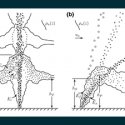
Researchers combined detailed observations, laboratory experiments, and existing numerical models to develop the Texas A&M Oil Spill (Outflow) Calculator (TAMOC) and improve predictions of subsea oil and gas plume dynamics.
|
|
|
Posted on December 27, 2017
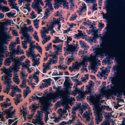
What are deep-sea corals? Why are researchers conducting studies on their health? What type of equipment do scientists use to conduct research at the deep ocean seafloor?
|
|
|
Posted on January 5, 2017
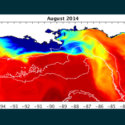
The flow of the Mississippi River into the northern Gulf of Mexico may have caused circulation patterns and fronts that significantly influenced the transport and fate of Deepwater Horizon oil. However, the Gulf’s complex topography and the proximity of variable oceanic currents to the Mississippi Delta make it difficult to monitor and model these processes.
|
|
|
Study Visualizes Microbial Biofilm Formation and How it Disperses Oil
Biofilm formation by hydrocarbon-degrading marine bacteria and its effects on oil dispersion. Omarova, M.; Swientoniewski, L.T.; Mkam Tsengam, I.K.; Blake, D.A.; John, V.; McCormick, A.; Bothun, G.D.; Raghavan, S.R.; Bose, A. ACS Sustainable Chemistry & Engineering, 2019, 7, 17, 14490-14499
Study Finds Fishing Households Vulnerable to Depressive Symptoms after Oil Spill
Fishing Households, Social Support, and Depression after the Deepwater Horizon Oil Spill. Parks, V.; Slack, T.; Ramchand, R.; Drakeford, L.; Finucane, M.L.; Lee, M.R. Rural Sociology, 2019, pp. 1–24 doi:10.1111/ruso.12297
|
|
Dataset for: Targeted and Stimulus-Responsive Delivery of Surfactant to the Oil-Water Interface for Applications in Oil Spill Remediation -- data link
Acoustic Scintillation Flow Meter (ASFM) data obtained in the bottom boundary layer near a natural hydrocarbon seep site in the Gulf of Mexico from 2017-09-03 to 2017-09-16 -- data link
Measurements of radium isotopes (224Ra, 228Ra and 226Ra) in water column samples collected aboard R/V Point Sur cruise PS19_14 in the Gulf of Mexico from 2019-01-27 to 2019-01-28 -- data link
|
|
Latest News! 2020 Gulf of Mexico Oil Spill & Ecosystem Science Conference
- Registration The full conference registration fee covers entry to all conference activities, including workshops, breaks, and breakfast. When registering for the conference, please enter your hotel confirmation number to receive the discount (Marriott Water Street hotel and Barrymore hotel only).
- Regular $650 ($550 with conference hotel reservation).
- Student $300 ($250 with conference hotel reservation).
- One-day Regular $300 (no hotel reservation required).
- Workshop-Only $250 (attendance only at a workshop and not any part of the conference).
- Onsite registration will be available subject to a $50 late fee
|
|
|
|
|
|
|