|
|
|
|
December 24, 2019 GoMRI eNews
|
|
It is with deep sadness that the Gulf of Mexico Research Initiative (GoMRI) shares that Dr. Ciro V. Sumaya passed away on Sunday December 1, 2019.
|
|
|
The Gulf of Mexico Research Initiative (GoMRI) is pleased to announce a new Sea Grant publication on technologies that complement traditional ship, satellite, and mooring-based tools that researchers use to study oil spills, including Deepwater Horizon.
|
|
|
University of New Orleans doctoral student Kendal Leftwich, who is a member of the LADC-GEMM research consortium investigating how Deepwater Horizon affected large marine mammals, created and implemented a year-long physics methodology to engage high school students in university research.
|
|
|
Because oil and water don’t mix easily, oil droplets in the ocean environment tend to aggregate into larger masses, which hinders microbial degradation.
|
|
|
Posted on December 20, 2018
Scientists developed a two-stage algorithm that identified the status of drogues attached to ocean drifters deployed during the Lagrangian Submesoscale Experiment (LASER).
|
|
|
Posted on December 20, 2017
Alabama researchers measured the nitrogen removal capacity of marsh sediments and compared it to sediments from subtidal unvegetated mudflats, which are what the marsh becomes when it erodes.
|
|
|
Posted on December 21, 2016
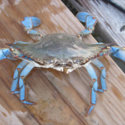
Louisiana scientists conducted genetic sequencing on oil-exposed blue crabs to identify genes involved in the blue crabs’ short-term responses to oil.
|
|
|
Study Compares Ability of Bacteria to Excrete Biofilms at Oil-Water Interface
Films of bacteria at interfaces (FBI): Remodeling of fluid interfaces by Pseudomonas aeruginosa. Niepa, T.H.R.; Vaccari, L.; Leheny, R.L.; Goulian, M.; Lee, D.; Stebe, K.J. Scientific Reports, Volume 7, Article Number 17864, 2017
Study Describes the Various Processes Affecting Marine Oil Spill Fate
The story of oil in the Gulf of Mexico: Where did the oil go? Davenport, E.; Bracken, L.; Beresford, S.; Conover, M. Current: The Journal of Marine Education, Volume 33, Number 1, 7–16, Winter 2019
|
|
Morbillivirus serology results in common bottlenose dolphins (Tursiops truncatus) from Barataria Bay, Louisiana from 2016-07-11 to 2017-09-21 -- data link
Dataset for: Direct visualization of oil degradation and biofilm formation for the screening of crude oil-degrading bacteria -- data link
Concentrations of polycyclic aromatic hydrocarbons (PAHs) in surface water of Galveston Bay collected aboard R/V Trident cruises following Hurricane Harvey from 2017-09-04 to 2017-09-28 -- data link
|
|
Latest News! 2020 Gulf of Mexico Oil Spill & Ecosystem Science Conference
- Registration The full conference registration fee covers entry to all conference activities, including workshops, breaks, and breakfast. When registering for the conference, please enter your hotel confirmation number to receive the discount (Marriott Water Street hotel and Barrymore hotel only).
- Regular $650 ($550 with conference hotel reservation).
- Student $300 ($250 with conference hotel reservation).
- One-day Regular $300 (no hotel reservation required).
- Workshop-Only $250 (attendance only at a workshop and not any part of the conference).
- Onsite registration will be available subject to a $50 late fee
|
|
|
|
|
|
|