|
|
|
|
October 15, 2019 GoMRI eNews
|
|
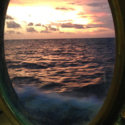
Scientists analyzed radiocarbon isotopes, which identify the source of carbons in compounds such as oil and methane, and applied those “fingerprints” to quantify recovery of deep-seafloor sediment contaminated by Deepwater Horizon.
|
|
|
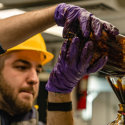
Scientists can use radium isotopes, which are released from oil in seawater and decay at a specific rate, as geochemical tracers to investigate marine processes involved in oil degradation.
|
|
|
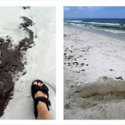
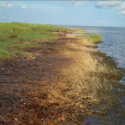
Researchers at Florida State University and the Georgia Institute of Technology analyzed degradation processes of oil that was deposited along Gulf of Mexico beaches following Deepwater Horizon.
|
|
|
Posted on October 11, 2018
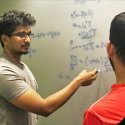
Oil, gases, and bubbles jet out together during a deep-ocean petroleum blowout, and the oil quickly breaks up into different-sized droplets. Predicting the sizes of these droplets is critical to determine how long it will take the oil to reach the ocean’s surface and the resulting oil slick’s size.
|
|
|
Posted on October 13, 2017
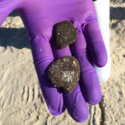
Researchers analyzed the combined effects of photooxidation and biodegradation on sand patties associated with the Deepwater Horizon incident. The scientists found that irradiation contributed to increased concentrations of dissolved organic carbon, which leached from sand patties penetrated by seawater.
|
|
|
Posted on October 13, 2016
Louisiana State University scientists quantified Louisiana island erosion pre- and post-Deepwater Horizon to determine the shoreline retreat rate when oiled, the length of time that oiling effects lasted, and whether or not there was recovery.
|
|
|
Study Sheds New Light on Deep Lagrangian Circulation in the Gulf of Mexico
Lagrangian Geography of the Deep Gulf of Mexico. Miron, P.; Beron-Vera, F.J.; Olascoaga, M.J.; Froyland, G.; Perez-Brunius, P.; Sheinbaum, J. 2019, Journal of Physical Oceanography, 49, 269–290
Study Provides Insights into Effects of Ocean Fronts on How Floating Oil Spill Material Moves
Accumulation and Subduction of Buoyant Material at Submesoscale Fronts. Taylor, J.R. 2018, Journal of Physical Oceanography, 48, 1233–1241
|
|
Meiofauna from an experimental mesocosm system prior to oiling: 2018-07-17 and 2019-06-18 -- data link
Marsh predation experiments across Louisiana and North Carolina, 2015-05-12 to 2019-07-12 -- data link
Common bottlenose dolphin (Tursiops truncatus) data to evaluate reproductive health among wild dolphins in Barataria Bay, Louisiana from 2017-09-18 to 2017-09-21 -- data link
|
|
Registration Open for 2020 Gulf of Mexico Oil Spill & Ecosystem Science Conference
The full conference registration fee covers entry to all conference activities, including workshops, breaks, and breakfast. Attendees who stay at the Tampa Marriott Water Street (the conference venue) will receive a discount on registration. When registering for the conference, please enter your hotel confirmation number to receive the discount. Click here to make a reservation at the Marriott.
- Early Bird (on or before November 30, 2019) - $550 ($450 with conference hotel reservation).
- Regular (after November 30) - $650. ($550 with conference hotel reservation).
- Student - $300. ($250 with conference hotel reservation).
- One-day Early (on or before November 30) - $250 (no hotel reservation required).
- One-day Regular (after November 30) - $300 (no hotel reservation required).
- Workshop-Only - $250 (attendance only at a workshop and not any part of the conference).
- Onsite registration will be available subject to a $50 late fee
|
|
CARMMHA Provides Update on Research Progress
The blog post details the consortium’s progress in several major research categories including cardiotoxicity, immunotoxicity, and dietary assessments, field sampling projects, and integrative modeling.
RECOVER Tool Tuesday Profile Highlights Radios
Participants aboard the research vessels R/V Walton Smith and Yellowfin University of Miami’s use radios for important communications between consortium researchers and with the captain and crew. Radio communications can help researchers relay important information such as travel plans and fish size.
|
|
|
|
|
|
|