|
|
|
|
September 3, 2019 GoMRI eNews
|
|
The leaders of the GoMRI Core Area 6 synthesis effort are pleased to announce Session 22, entitled Microbial Genomics to Improve Predictive Understanding of Disturbance in the Global Ocean System, at the 2020 Gulf of Mexico Oil Spill and Ecosystem Science Conference.
|
|
|
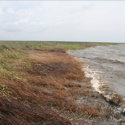
Scientists measured changes in oil quantity and quality in 1,200+ samples collected over eight years at locations that Deepwater Horizon affected – the Gulf of Mexico continental shelf, estuarine waters, and marsh sediments.
|
|
|
The synthesis of information is highly sought after, as evident in increased popularity of on-line articles like “Top Takeaways From….”
|
|
|
Scientists conducted field and laboratory experiments using oil and Corexit dispersant to uncover the reasons harmful algal blooms, also known as Red Tides, can occur after an oil spill.
|
|
|
Posted on August 23, 2018
Oil spill material that enters the water column may adhere to resuspended seafloor sediments and be transported to other areas. Stephan O’Brien is investigating how physical factors, such as wind and waves, affect the suspension and subsequent transport of sediments in the Mississippi Sound and Bight.
|
|
|
Posted on August 29, 2017
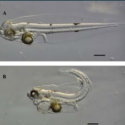
Researchers conducted laboratory experiments to assess the lethal and sublethal impacts of weathered and non-weathered crude oil exposure on red drum larvae. The scientists observed a 70% reduction in cardiac output in oil-exposed larvae, even at low oil concentrations.
|
|
|
Posted on August 26, 2016
An interdisciplinary scientific team conducted a rapid response sampling campaign in the immediate aftermath of the 2013 Hercules 265 blowout to determine if sediment and fish were polluted above established baseline levels.
|
|
|
Study Uses FTICR-MS to Analyze Mescocosm-Generated Marine Oil Snow
Rapid degradation of oil in mesocosm simulations of marine oil snow events. Wozniak, A.S.; Prem, P.M.; Obeid, W.; Waggoner, D.C.; Quigg, A.; Xu, C.; Santschi, P.H.; Schwehr, K.A.; Hatcher, P.G. Environmental Science & Technology,.2019, 53, 7, 3441-3450
Study Comparing Oil Fate Models Finds Droplet Size is Most Important Factor
The treatment of biodegradation in models of sub-surface oil spills: A review and sensitivity study. Socolofsky, S.A.; Gros, J.; North, E.; Boufadel, M.C.; Parkerton, T.F.; Adams, E.E. Marine Pollution Bulletin, Volume 143, June 2019, Pages 204-219
|
|
Dataset for: Blood-brain barrier function, cell viability, and gene expression of tight junction-associated proteins in the mouse are disrupted by crude oil, benzo [a]pyrene, and the dispersant COREXIT -- data link
4.2K emission spectra for the synthetic binary mixtures of high molecular weight – polycyclic aromatic hydrocarbons -- data link
Comparison of fluorescence lifetimes of target polycyclic aromatic hydrocarbons in standard reference material 1597a -- data link
|
|
Sept 30 Deadline: Submit Abstracts for the 2020 GoMOSES Conference
The 2020 Gulf of Mexico Oil Spill and Ecosystem Conference is soliciting abstracts that share latest research findings and support interdisciplinary dialogue about research implications, applications, and synthesis. Priority will be given to abstracts that promote fundamental Gulf of Mexico ecosystem science and link scientific results to ecosystem resilience, oil spill response, or restoration and management. Abstract submission ends September 30, 2019. Click here to submit an abstract. You do not need to be registered to submit an abstract.
Sea Grant Updates Oil Spill FAQs
One of the Sea Grant oil spill outreach program’s original publications, Top 5 frequently asked questions about the Deepwater Horizon oil spill now includes most recent findings from peer-reviewed research.
Presentation Videos Available for Sea Grant "Underdogs" Seminar
The August 13, 2019 seminar Using the underdogs of the animal world to gain insights into impacts, recovery, and restoration after oil spills discussed how foraminifera, periwinkles, larval fish, and insects play critical ecosystem roles and could be used to guide restoration efforts. View the 10 presentation videos from that event.
|
|
CARMMHA Hosts Dispatches from the Gulf 2 Screening
The sold-out screening in Charleston, South Carolina, was attended by Mayor John Tecklenburg and included a panel discussion with special guests Congressman Joe Cunningham and NOAA’s National Ocean Service Acting Assistant Administrator Nicole LeBoeuf. The panel discussed lessons learned from the Deepwater Horizon oil spill and oil exposure’s effects on dolphins.
RECOVER Tool Profile Tuesday Highlights Birds
Researchers participating in the MAHI research cruise relied on swallows to locate schools of tagging-size mahi-mahi. Pockets of diving birds such as swallows and frigatebirds are an indication of baitfish (prey), which means larger predators like mahi-mahi are likely close by.
|
|
|
|
|
|
|