GoMRI eNews · Jun 25, 2019 · ← All issues
Welcome to the GoMRI eNews.

Keeping you current on emerging Gulf science and the people investigating the effects of oil spills on the environment and public health.

June 25, 2019                                                                    GoMRI eNews

Stories

Smithsonian Highlights Technology that Tracks the Ocean’s Flow

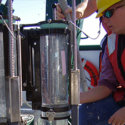
Study Describes Six-Year Evolution of Gulf Sediments Following Deepwater Horizon

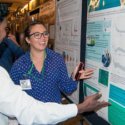
Grad Student Grossi Uses Artificial Intelligence to Map Ocean Flows

From the Archives

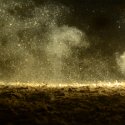
Study Tracks Sediment Resuspension Events in the Northern Gulf of Mexico

Posted on June 21, 2018
Researchers identified small- to hurricane-scale resuspension events using time-series data of sinking organic material near the Deepwater Horizon site.

Grad Student Mahmud Makes Acoustics and Tracking Marine Mammals “Click”

Posted on June 22, 2017
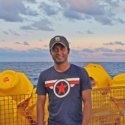
Sakib Mahmud tests combinations of passive acoustic monitoring equipment to find the best method to detect and measure marine mammal populations affected by the Deepwater Horizon oil spill. His findings will help improve our understanding of long-term environmental impacts of the spill on deep-diving marine mammals and aid in improving oil spill regulations, monitoring, and mitigation efforts.
Grad Student Morales-McDevitt Explores How Nutrients Influence Marine Snow Formation

Posted on June 16, 2017
Marine oil snow is the largest commuter of carbon to the seafloor and occurs when oil and marine particles aggregate and sink through the water column. Maya Morales-McDevitt conducts mesocosm experiments investigating how certain naturally occurring nutrients influence EPS production and oil degradation.

Publications

Study Investigates How Metabolism of Low-Molecular-Weight Carbon Compounds Affects Oil Biodegradation
Heterotrophic metabolism of C1 and C2 low molecular weight compounds in northern Gulf of Mexico sediments: Controlling factors and implications for organic carbon degradation. Zhuang, G.-C.; Montgomery, A.; Joye, S.B. Geochimica et Cosmochimica Acta Volume 247, 15 February 2019, Pages 243-260

Study Identifies Microorganisms with High EPS Production and Oil Biodegradation Capabilities
Extracellular polymeric substances (EPS) producing and oil degrading bacteria isolated from the northern Gulf of Mexico. Bacosa, H.P.; Kamalanathan, M.; Chiu, M.-H.; Tsai, S.-M.; Sun, L.; Labont , J.M.; Schwehr, K.A.; Hala, D.; Santschi, P.H.; Chin, W.-C.; Quigg, A.; Franzetti, A. PLoS ONE 13(12): e0208406. https://doi.org/10.1371/journal.pone.0208406(2018)

Data

Laboratory measurements of polycyclic aromatic hydrocarbon (PAH) concentrations in the blood of mahi-mahi (Coryphaena hippurus) -- data link

CTD, ADCP, meteorological, and flow-through instrumental data collected onboard the R/V Weatherbird II cruise WB0517 in the northwestern margin of Cuba from 2017-05-09 to 2017-05-25 -- data link

FVCOM-simulated hydrodynamic variables for Barataria Bay, Louisiana from 2016-12-07 to 2017-03-05 -- data link

Announcements

July 1 Sea Grant Seminar on Oil Spill Impacts on Estuaries
Registration is open for the July 1 seminar “Impacts of oil spills on estuaries” from 1-4 PM at the Grand Bay National Estuarine Research Reserve in Moss Point, Mississippi. This free event will also be live-streamed online. View the flyer here. Register here.   

Save-the-Date August 13 Sea Grant Seminar on Overlooked Species
A new seminar is being planned and will focus on species that media often overlook during a spill, and those species' potential roles in guiding restoration efforts. The August 13 seminar will be held at the Southeast Louisiana National Wildlife Refuges Complex in Lacombe, Louisiana. It will also be live-streamed. More information soon available here. 

Project Activities

CARMMHA Researcher Discusses Dolphin Health with Locals
Over 50 locals attended Dr. Ruth Carmichael’s lecture at the University of South Alabama Gulf Coast Campus. She discussed threats to marine mammals in northern Gulf of Mexico waters and her marine mammal research program, which includes CARMMHA’s efforts to understand the health of bottlenose dolphins post-Deepwater Horizon.
 
CARTHE Research Featured by National Academy of Sciences
A recent article, published as a Proceedings of the National Academy of Sciences news feature, details the consortium’s efforts to understand the physics and chemistry that affected spilled Deepwater Horizon oil and assess the effectiveness of response methods.
 
RECOVER Tuesday Tool Profile Features Blenders
Consortium researchers use blenders to create the high-energy water-accommodated fractions (HEWAFs) of Deepwater Horizon oil used in oil exposure experiments. After capture and tagging, mahi are held overnight in tanks containing seawater alone or seawater plus HEWAF before being released to help researchers track how oil exposure affect wild mahi-mahi.