|
|
|
|
June 11, 2019 GoMRI eNews
|
|
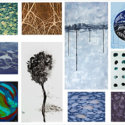
Albert Einstein considered art and science to be entwined, stating that “Experiencing the mysterious is the fundamental emotion that stands at the cradle of true art and science.”
|
|
|
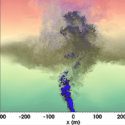
Scientists assessed an economical 2D model simulation of deep-ocean oil plume dynamics against 3D model results using conditions similar to Deepwater Horizon to better understand point-source buoyant convection, which affects the oil’s spreading rate and environmental impact.
|
|
|
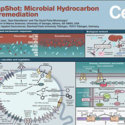
Researchers compiled a two-page summary with detailed graphics explaining the complex mechanisms and processes involved in microbial hydrocarbon bioremediation.
|
|
|
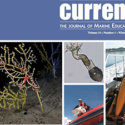
The Gulf of Mexico Research Initiative (GoMRI) is pleased to announce the release of Gulf of Mexico Research Initiative: Research Resulting from the 2010 Deepwater Horizon Oil Spill, a special issue of Current: The Journal of Marine Education.
|
|
|
Posted on June 7, 2018
Researchers analyzed the resource use of Seaside Sparrows residing in salt marshes impacted by large-scale disturbances like Deepwater Horizon and Hurricane Isaac to understand the effects on these indicators of ecological change.
|
|
|
Posted on June 6, 2017
A 12-day science expedition on the exploration vessel Ocean Intervention II embarks June 11 to investigate how oil, gas, and chemical dispersants affect marine life and their environment deep in the Gulf of Mexico. Scientists and outreach personnel onboard the vessel will interact with the public and school-age children using streaming video, social media, and question-and-answer sessions.
|
|
|
Posted on June 7, 2016
Responders to the Deepwater Horizon spill used large quantities of dispersant to facilitate oil biodegradation, but could a different method be safer for the environment?
|
|
|
Study Finds Dispersed Oil, But Not Oil Alone, Negatively Affects Phytoplankton
Response of natural phytoplankton communities exposed to crude oil and chemical dispersants during a mesocosm experiment. Bretherton, L.; Kamalanathan, M.; Genzer, J.; Hillhouse, J.; Setta, S.; Liang, Y.; Brown, C.M.; Xu, C.; Sweet, J.; Passow, U.; Finkel, Z.V.; Irwin, A.J.; Santschi, P.H.; Quigg, A. Aquatic Toxicology, Volume 206, January 2019, Pages 43-53
Study Offers Insights Into Organic Particle Dynamics with Oil and Dispersant
Impact of exposure of crude oil and dispersant (Corexit) on aggregation of extracellular polymeric substances. Chiu, M.-H.; Vazquez, C.I.; Shiu, R.-F.; Le, C.; Sanchez, N.R.; Kagiri, A.; Garcia, C.A.; Nguyen, C.H.; Tsai, S.-M.; Zhang, S.; Xu, C.; Santschi, P.H.; Quigg, A.; Chin, W.-C. Science of the Total Environment, Volume 657, 20 March 2019, Pages 1535-1542
|
|
MOCNESS ichthyoplankton data collected on board the R/V Nick Skansi cruise NS9 during the NRDA Plankton Survey in the northern Gulf of Mexico from 2011-04-17 to 2011-06-26 -- data link
MOCNESS ichthyoplankton data collected on board the R/V Nick Skansi cruise NSPC3 during the NRDA Plankton Survey in the northern Gulf of Mexico from 2010-09-25 to 2010-10-03 -- data link
Neuston ichthyoplankton data collected on board the R/V F.G. Walton Smith cruise WS1107 during the NRDA Plankton Survey in the northern Gulf of Mexico from 2011-04-21 to 2011-05-26 -- data link
|
|
|
|
|
|
|