|
|
|
|
February 5, 2019 GoMRI eNews
|
|
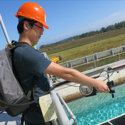
Scientists analyzed spectral images of surface oil slicks and proposed a new method to determine oil distribution and thickness when high resolution imagery is not available.
|
|
|
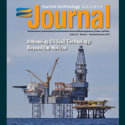
The Gulf of Mexico Research Initiative (GoMRI) is pleased to announce the Marine Technology Society Journal special issue, Advancing Oil Spill Technology: Beyond the Horizon (Volume 52, Number 6, November/December 2018).
|
|
|
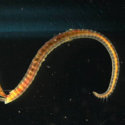
Scientists completed a regionally comprehensive analysis of impacts and recovery from Deepwater Horizon oiling in Louisiana’s Barataria Bay sediment-dwelling infaunal community (microalgae and small multi-cellular animals).
|
|
|
Ocean models that utilize surface drifter data can provide oil spill responders with important information about the floating oil’s direction and speed as it moves along the ocean surface.
|
|
|
Posted on February 2, 2018
Researchers simulated the sinking of marine particle aggregates in oil-dispersant mixtures to assess how Corexit chemical dispersant affects specific biological processes involving marine oil snow formation. The team found that Corexit could significantly enhance or inhibit marine oil snow formation depending on application timing and location and interactions with other water column compounds, making its influence difficult to predict.
|
|
|
Posted on January 31, 2017
Scientists analyzed weathered and fresh Macondo oil to learn about oil products resulting from microbial degradation and photochemical reactions. They observed that 48 months after the Deepwater Horizon spill, less than 1 percent of oil remained in marsh sediments collected from heavily-impacted sites; however, it was still 400 times greater than sites with moderate-to-no observed oiling.
|
|
|
Posted on January 28, 2016
Scientists representing eight institutions conducted in-situ observations and laboratory experiments to determine if Hurricane Isaac redistributed sedimented oil near the Deepwater Horizon site.
|
|
|
Study Shows Satellite and Airborne Instruments Can Estimate Surface Oil Volume and Thickness
Remote sensing estimation of surface oil volume during the 2010 Deepwater Horizon oil blowout in the Gulf of Mexico: Scaling up AVIRIS observations with MODIS measurements. Hu, C.; Feng, L.; Holmes, J.; Swayze, G.A.; Leifer, I.; Melton, C.; Garcia, O.; MacDonald, I.; Hess, M.; Muller-Karger, F.; Graettinger, G.; Green, R. Journal of Applied Remote Sensing, 12(2) 026008 (27 April 2018)
Study Demonstrates Ongoing Biodegradation of Weathered Oil Residues In Sand Patties
Ongoing biodegradation of Deepwater Horizon oil in beach sands: Insights from tracing petroleum carbon into microbial biomass. Bostic, J.T.; Aeppli, C.; Swarthout, R.F.; Reddy, C.M.; Ziolkowski, L.A. Marine Pollution Bulletin, Volume 126, January 2018, Pages 130-136
|
|
Trace metals in sediment cores collected during the R/V Justo Sierra cruise and coastal sampling in the southern Gulf of Mexico from 2015-07-31 to 2016-08-10 -- data link
Dataset for: Resilience: Examining the Impacts of the Deepwater Horizon Oil Spill on the Gulf Coast Vietnamese American Community -- data link
Dataset for: Deepwater Horizon oil alone and in conjunction with Vibrio anguillarum exposure modulates immune response and growth in red snapper (Lutjanus campechanus) -- data link
|
|
Now Available! 2018 Winter GoMRI Newsletter
Check out this issue which includes interviews with Dr. Tim Slack (CRGC), Dr. Eric Chassignet and Dr. Steve Moray (CSOMIO), and Dr. Lori Schwacke (CARMMHA).
Latest News for 2019 Gulf of Mexico Oil Spill and Ecosystem Science Conference
- Online Program & Mobile App. Build your personal schedule using the online planner or the Crowd Compass Attendee Hub app.
- Session Schedule. A downloadable version is available here.
Latest News for 2019 Sea Grant Workshops and Seminars
- Register for February 28 Birds & oil spills seminar. This free event will be held in Baton Rouge, Louisiana in partnership with the U.S. Fish & Wildlife service. Topics will include toxicological effects, impacts to marsh dwelling and migratory species, oil spill response, rehabilitation, and monitoring efforts. Live-streaming will be available for those who can’t attend in person. Register here.
- Dates for Regional Priority-Setting for Health, Social, and Economic Disruption from Spills Workshops. This public health series is hosted by the National Academies, GoMRI, and Sea Grant. The meeting in Anchorage, Alaska will be on February 20 and 21; Virginia Beach, Virginia on March 29; and Santa Barbara, California on April 5. Learn more here.
- Seminar Videos Available Online. You can access presentations from Technology used to study oil spills, Part 2 and from Prioritizing health and oil spill preparedness,
- Publications Available in Spanish and Vietnamese. You can access translated publications for Storms and spills and Where did the oil go? A Deepwater Horizon fact sheet. at the bottom of this page.
|
|
|
|
|
|
|