|
|
|
|
October 30, 2018 GoMRI eNews
|
|
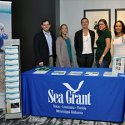
The Gulf of Mexico Research Initiative is pleased to announce that its partner Sea Grant and their Oil Spill Science Outreach Program received the National Superior Outreach Programming Award for synthesizing research results related to the Deepwater Horizon incident and engaging audiences who rely on healthy marine ecosystems to learn of their needs and share the latest science.
|
|
|
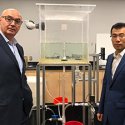
Scientists analyzed visual observations and computer simulations of the Deepwater Horizon oil flow to better understand the characteristics of an uncontrolled pipeline flow and how they affect the amount of oil discharge and droplet size distribution, which are critical for effective response decisions.
|
|
|
Oil, gases, and bubbles jet out together during a deep-ocean petroleum blowout, and the oil quickly breaks up into different-sized droplets. Predicting the sizes of these droplets is critical to determine how long it will take the oil to reach the ocean’s surface and the resulting oil slick’s size.
|
|
|
Outreach specialists working with science consortia, funded by the Gulf of Mexico Research Initiative (GoMRI), reflected on their collective multi-year efforts for insights gained and lessons learned. These reflections resulted in recommendations for creating, managing, and implementing scientific outreach plans.
|
|
|
Posted on October 24, 2017
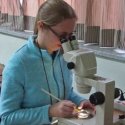
Meiofauna provide important ecosystem services such as waste removal to the deep sea-floor environment and can act as indicators of ecosystem health.
|
|
|
Posted on October 18, 2016
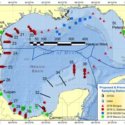
An international science team recently completed a 4,000-mile expedition to learn more about the long-term fate of two of the world’s largest subsea oil spills, the 1979 Ixtoc-I and the 2010 Deepwater Horizon. The 40-day Gulf of Mexico voyage continued their 2015 field campaign, contributing to a multi-year Gulf-wide analysis of these oil spills and the marine environment’s response and recovery.
|
|
|
Posted on October 28, 2015
Jarrett Cruz has been all over the world studying nannoplankton, a marine species he did not know existed when his journey began. Jarrett’s research into these minuscule creatures spans both biology and geology as he studies the impact of oil on nannoplankton that live in the Gulf of Mexico.
|
|
|
Study Finds Razor Clams Help Remove Oil from Surface Sediments
Effects of the razor clam Tagelus plebeius on the fate of petroleum hydrocarbons: A mesocosm experiment. Klerks, P.L.; Kascak, A.; Cazan, A.M.; Deb Adhikary, N.; Chistoserdov, A.; Shaik, A.; Osman, S.; Louka, F.R. Environmental Contamination and Toxicology, August 2018, Volume 75, Issue 2, pp 306–315
Study Shows Sunlight Chemically Altered 50% of Floating Oil in a Few Days
How persistent and bioavailable are oxygenated Deepwater Horizon oil transformation products? Aeppli, C.; Swarthout, R.F.; O'Neil, G.W.; Katz, S.D.; Nabi, D.; Ward, C.P.; Nelson, R.K.; Sharpless, C.M.; Reddy, C.M. Environmental Science & Technology, 2018, 52, 13, 7250-7258
|
|
Crude oil degradation performance of a deep sea Rhodococcus PC20 strain under the influence of elevated hydrostatic pressure and dispersant -- data link
Expression of UV repair enzymes and relation to buoyancy change in mahi-mahi (Coryphaena hippurus) embryos -- data link
Erosion data collected from 21 stations in Barataria Bay, Gulf of Mexico from 2015-05-28 to 2018-05-10 -- data link
|
|
Tips for Sharing Science
The Sea Grant Oil Spill Science Outreach team offers presentation tips based on team ideas and snippets from the February 2018 science communication workshop.
Sea Grant Oil Spill Workshops on Human Health, Social Science, and Economics
The first workshop in a year-long national series to improve community preparedness for oil spills will be held the first week of December 2018 in Houma, Louisiana. Please check here for developing details.
Latest News for 2019 Gulf of Mexico Oil Spill and Ecosystem Science Conference
- Workshop Proposals. There is space available, on a first-come-first-served basis, for pre-conference workshops on Mon Feb 4. If you wish to organize a workshop, please submit the following to gulfconference@oceanleadership.org: workshop title, summary/description, organizer's name and affiliation, workshop duration (in hours), and estimated number of attendees.
- Registration Cost Changes. Options now include a one-day workshop fee for those only attending a workshop ($75). The full registration fee covers all workshops and conference activities ($500 for early registration on or before Nov 30, 2018; $250 for students). Register for the conference here.
- Registration Discounts. Attendees who stay at the Hyatt Regency (the conference venue) will receive a $100 discount on registration ($50 discount for students). When registering for the conference, you need to enter your hotel confirmation number to receive the discount. Make a reservation at the Hyatt Regency here. Reservations must be made at the Hyatt Regency to qualify for the discount. Although Hyatt House is connected to the Hyatt Regency, the parent company treats them as separate businesses and reservations made at Hyatt House are not included in the conference room block.
|
|
CARMMHA Blog Describes How Researchers Track Dolphin Movement
During the team’s capture-release activities, researchers attach light-weight satellite tags to some of the captured dolphins, which transmits their location to a satellite network when the animal surfaces. These aero- and hydrodynamic tags sit just behind the dorsal fin to minimize possible drag on the tagged animals.
Get to Know CWC Researcher Jordan Logarbo
Logarbo carries out a variety of tasks as a research assistant in the LUMCON Biogeochemistry lab, including field sampling and analyzing nutrients, to help the team better understand how the Deepwater Horizon spill affected coastal salt marshes. Learn more about her background and research here.
RECOVER Scientist Presents Research at UNT S.M.A.R.T. Talk
Dr. Aaron Roberts recently presented a lecture highlighting the importance of understanding how oil spills affect aquatic life as part of the University of North Texas S.M.A.R.T. (Science and Mathematics Advancing Research and Technology) lecture series. Roberts’ lab was one of the lead test laboratories for the Natural Resource Damage Assessment following the spill.
|
|
|
|
|
|
|