|
|
|
|
October 16, 2018 GoMRI eNews
|
|
Oil, gases, and bubbles jet out together during a deep-ocean petroleum blowout, and the oil quickly breaks up into different-sized droplets. Predicting the sizes of these droplets is critical to determine how long it will take the oil to reach the ocean’s surface and the resulting oil slick’s size.
|
|
|
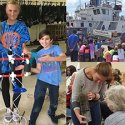
Outreach specialists working with science consortia, funded by the Gulf of Mexico Research Initiative (GoMRI), reflected on their collective multi-year efforts for insights gained and lessons learned. These reflections resulted in recommendations for creating, managing, and implementing scientific outreach plans.
|
|
|
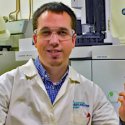
When the Deepwater Horizon incident occurred, not much was known about how conditions in the deep sea would affect oil biodegradation. Juan Viamonte uses high-pressure reactors that simulate conditions at depth to observe microbial degradation and help predict what might happen should another deep-ocean oil spill occur.
|
|
|
The Gulf of Mexico Research Initiative is pleased to announce a new Sea Grant publication about how oysters, which play a critical role in a healthy coastal wetland, fare when faced with oil exposure. The outreach publication also discusses how the Deepwater Horizon incident and subsequent response efforts affected oysters, a vital part of Louisiana’s seafood industry which is the nation’s second-largest seafood supplier.
|
|
|
Posted on October 13, 2017
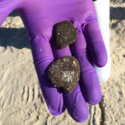
Researchers analyzed the combined effects of photooxidation and biodegradation on sand patties associated with the Deepwater Horizon incident. The scientists found that irradiation contributed to increased concentrations of dissolved organic carbon, which leached from sand patties penetrated by seawater.
|
|
|
Posted on October 13, 2016
Louisiana State University scientists quantified Louisiana island erosion pre- and post-Deepwater Horizon to determine the shoreline retreat rate when oiled, the length of time that oiling effects lasted, and whether or not there was recovery.
|
|
|
Posted on October 13, 2015
Two studies show that some demersal fishes living in waters likely contaminated by the Deepwater Horizon oil spill exhibited elevated hydrocarbon concentrations and experienced shifts in diet and trophic level.
|
|
|
Study Analyses Fish Abundance and Composition Data Across Gulf of Mexico Continental Shelves
Comparative Abundance, Species Composition, and Demographics of Continental Shelf Fish Assemblages throughout the Gulf of Mexico. Murawski, S.A.; Peebles, E.B.; Gracia, A.; Tunnell, J.W.; Armenteros, M. Marine and Coastal Fisheries, Volume 10, Issue 3, June 2018, Pages 325-346
Study Shows Horizontal Convergence and Vertical Flux Significantly Impact the Trajectory of Sinking Particles in the Northern Gulf of Mexico
The influence of mesoscale and submesoscale circulation on sinking particles in the northern Gulf of Mexico. Liu, G.; Bracco, A.; Passow, U. Elementa: Science of the Anthropocene, Volume 6, Issue 1, April 2018, Article 36
|
|
Mesozooplankton size-fractionated gut fluorescence data collected during R/V Point Sur cruise PTS02 from 2016-03-30 to 2016-04-09 -- data link
Mesozooplankton size-fractionated gut fluorescence data collected during R/V Point Sur cruise PTS03 from 2016-07-24 to 2016-07-30 -- data link
Radar measurements collected during the LAgrangian Submesoscale ExpeRiment (LASER) experiment aboard R/V Walton Smith cruise WS16015 in the Gulf of Mexico from 2016-01-20 to 2016-02-12 -- data link
|
|
Latest News for 2019 Gulf of Mexico Oil Spill and Ecosystem Science Conference
- Registration Cost Changes. Options now include a one-day workshop fee for those only attending a workshop ($75). The full registration fee covers all workshops and conference activities ($500 for early registration on or before Nov 30, 2018; $250 for students). Register for the conference here.
- Registration Discounts. Attendees who stay at the Hyatt Regency (the conference venue) will receive a $100 discount on registration ($50 discount for students). When registering for the conference, you need to enter your hotel confirmation number to receive the discount. Make a reservation at the Hyatt Regency here. Reservations must be made at the Hyatt Regency to qualify for the discount. Although Hyatt House is connected to the Hyatt Regency, the parent company treats them as separate businesses and reservations made at Hyatt House are not included in the conference room block.
|
|
|
|
|
|
|