|
|
|
|
October 2, 2018 GoMRI eNews
|
|
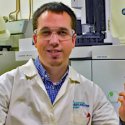
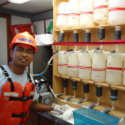
When the Deepwater Horizon incident occurred, not much was known about how conditions in the deep sea would affect oil biodegradation. Juan Viamonte uses high-pressure reactors that simulate conditions at depth to observe microbial degradation and help predict what might happen should another deep-ocean oil spill occur.
|
|
|
The Gulf of Mexico Research Initiative is pleased to announce a new Sea Grant publication about how oysters, which play a critical role in a healthy coastal wetland, fare when faced with oil exposure. The outreach publication also discusses how the Deepwater Horizon incident and subsequent response efforts affected oysters, a vital part of Louisiana’s seafood industry which is the nation’s second-largest seafood supplier.
|
|
|
Following the Deepwater Horizon incident, the National Center for Disaster Preparedness surveyed households in highly-affected areas of Louisiana to track the event’s impacts on the physical and social health of coastal families and their communities.
|
|
|
Posted on September 28, 2017
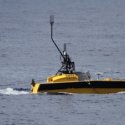
Scientists conducted passive acoustic monitoring (PAM) of whales in the northern Gulf of Mexico using two autonomous surface vehicles (ASVs) capable of recording marine mammal sounds.
|
|
|
Posted on September 27, 2016
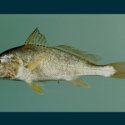
Scientists from the University of Texas Marine Science Institute demonstrated how natural sunlight affects Gulf of Mexico microbial communities in the presence of Corexit (dispersant) and crude oil. They observed that sunlight significantly reduced the diversity of bacterial communities in the presence of oil, Corexit, or both.
|
|
|
Posted on September 21, 2015
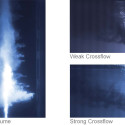
An international science team assessed predictions from multiple oil spill models and found that subsea dispersants used during response to a simulated accidental blowout may reduce oil droplet size by at least one order of magnitude.
|
|
|
Study Finds Tidal Pumping Enhanced Biodegradation of Buried Oil
Degradation of Deepwater Horizon oil buried in a Florida beach influenced by tidal pumping. Huettel, M.; Overholt, W.A.; Kostka, J.E.; Hagan, C.; Kaba, J.; Wells, W.B.; Dudley, S. Marine Pollution Bulletin, Volume 126, January 2018, Pages 488-500
Study Tests How Environmental Conditions, Multiple Plant Species, and Genetic Diversity Affect Marsh Grasses and Mangroves
Effects of oil exposure, plant species composition, and plant genotypic diversity on salt marsh and mangrove assemblages. Hughes, A.R.; Cebrian, J.; Heck, K.; Goff, J.; Hanley, T.C.; Scheffel, W.; Zerebecki, R.A. Ecosphere, Volume 9, Issue 4, April 2018, e02207
|
|
Dataset for: Material dispersion by oceanic internal waves -- data link
Dataset for: Langmuir circulation with explicit surface waves from moving-mesh modeling -- data link
Dataset for: Determination of polycyclic aromatic hydrocarbons with molecular mass 302 in standard reference material 1597a by reversed-phase liquid chromatography and stop-flow fluorescence detection -- data link
|
|
Latest News for 2019 Gulf of Mexico Oil Spill and Ecosystem Science Conference
- Registration Cost Changes. Options now include a one-day workshop fee for those only attending a workshop ($75). The full registration fee covers all workshops and conference activities ($500 for early registration on or before Nov 30, 2018; $250 for students). Register for the conference here.
- Registration Discounts. Attendees who stay at the Hyatt Regency (the conference venue) will receive a $100 discount on registration ($50 discount for students). When registering for the conference, you need to enter your hotel confirmation number to receive the discount. Make a reservation at the Hyatt Regency here. Reservations must be made at the Hyatt Regency to qualify for the discount. Although Hyatt House is connected to the Hyatt Regency, the parent company treats them as separate businesses and reservations made at Hyatt House are not included in the conference room block.
|
|
|
|
|
|
|