|
|
|
|
September 4, 2018 GoMRI eNews
|
|
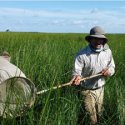
Researchers collected and analyzed terrestrial arthropods from Louisiana marshes to determine the combined effects from Deepwater Horizon and Hurricane Isaac on saltmarsh ecosystems. The initial oiling from the spill (2010) followed by the oil’s redistribution during Hurricane Isaac (2012) negatively affected some arthropod groups three-four years after the spill.
|
|
|
The Smithsonian’s Ocean Portal recently redesigned their website, and it now includes a page dedicated to the Deepwater Horizon incident.
|
|
|
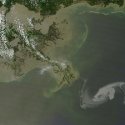
Oil spill material that enters the water column may adhere to resuspended seafloor sediments and be transported to other areas. Stephan O’Brien is investigating how physical factors, such as wind and waves, affect the suspension and subsequent transport of sediments in the Mississippi Sound and Bight.
|
|
|
Researchers analyzed an enhanced formulation of a gel-like surfactant encased in a compact buoyant pod for oil spill remediation.
|
|
|
Posted on August 29, 2017
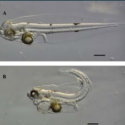
Researchers conducted laboratory experiments to assess the lethal and sublethal impacts of weathered and non-weathered crude oil exposure on red drum larvae. The scientists observed a 70% reduction in cardiac output in oil-exposed larvae, even at low oil concentrations.
|
|
|
Posted on August 26, 2016
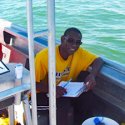
An interdisciplinary scientific team conducted a rapid response sampling campaign in the immediate aftermath of the 2013 Hercules 265 blowout to determine if sediment and fish were polluted above established baseline levels.
|
|
|
Posted on September 3, 2015
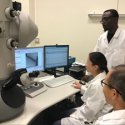
Scientists from the University of Texas at Austin assessed photooxidation and biodegradation rates on different hydrocarbon groups.
|
|
|
Study Finds Sunlight Reduced Dispersant’s Effectiveness During Deepwater Horizon
Photochemical oxidation of oil reduced the effectiveness of aerial dispersants applied in response to the Deepwater Horizon spill. Ward, C.P.; Armstrong, C.J.; Conmy, R.N.; French-McCay, D.P.; Reddy, C.M. Environmental Science and Technology Letters, 2018, 5 (5), pp 226–231
Study Shows that Benthic Foraminifera in Gulf Sediment Recorded the Dirty Blizzard
Tracing the incorporation of carbon into benthic foraminiferal calcite following the Deepwater Horizon event. Schwing, P.T.; Chanton, J.P.; Romero, I.C.; Hollander, D.J.; Goddard, E.A.; Brooks, G.R.; Larson, R.A. Environmental Pollution, Volume 237, June 2018, Pages 424-429
|
|
1988-2013 southeastern Louisiana: Land versus water based on Landsat Normalized Difference Vegetation Index (NDVI) -- data link
Dataset for: Examining the effect of reoccurring disturbances on population persistence with application to marine mammals -- data link
Dataset for: Advection of Karenia brevis from the Florida panhandle towards Mississippi coastal waters -- data link
|
|
Now Accepting Abstract Submissions for the 2019 Gulf of Mexico Oil Spill and Ecosystem Science Conference
The call for abstracts is open and will close on September 24, 2018. Priority will be given to abstracts that promote fundamental Gulf ecosystem science and link scientific results to ecosystem resilience, oil spill response, or restoration and management. You do not need to be registered for the conference to submit an abstract. Click here for abstract submission information.
Now Open! Registration for 2019 Gulf of Mexico Oil Spill and Ecosystem Science Conference
There are several changes of note from registrations of past years:
- The fee structure has changed this year to include a one-day workshop fee for those only attending a workshop ($75). The full conference registration fee covers all workshops and all conference activities ($500 for early registration on or before Nov 30, 2018; $250 for students). Register for the conference here.
- Attendees who stay at the Hyatt Regency (the conference venue) will receive a $100 discount on registration ($50 discount for students). When registering for the conference, you need to enter your hotel confirmation number to receive the discount. Make a reservation at the Hyatt Regency here. Reservations must be made at the Hyatt Regency to qualify for the discount. Although Hyatt House is connected to the Hyatt Regency, the parent company treats them as separate businesses and reservations made at Hyatt House are not included in the conference room block.
Workshop Series on Public Health, Social Disruptions, Economic Impacts from Oil Spills
A series of regional workshops by the Gulf Research Program (National Academies of Sciences, Engineering, and Medicine), the Gulf of Mexico Research Initiative, and various Sea Grant partners will address the overlapping impacts oil spills can have on nearby communities. Potential locations for the workshops include Alabama, Alaska, California, Louisiana, and Virginia. Check back on the Sea Grant Oil Spill Outreach team's website for dates, times, locations.
|
|
|
|
|
|
|