GoMRI eNews · May 15, 2018 · ← All issues
Welcome to the GoMRI eNews.

Keeping you current on emerging Gulf science and the people investigating the effects of oil spills on the environment and public health.

May 15, 2018                                                                    GoMRI eNews

Stories

Grad Student Lichtler Examines Mammalian Cell Response to Oil Exposure

Study Assesses Fish Otoliths for Metal Exposure after Deepwater Horizon

Grad Student DeLeo Used Genetics to Explore Oil, Dispersant Effects on Deep-Sea Corals

Look for these Tools and Resources for Oil Spill Research in 2020

From the Archives

Study Investigates Influence of Hurricanes on Ocean Surface Currents

Posted on May 4, 2017
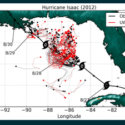
Scientists used GPS data collected from ocean drifters during Hurricane Isaac with a coupled atmosphere-wave-ocean model to better understand how hurricanes affect upper ocean circulation. The researchers found that hurricane-induced Stokes drift (wind-wave-driven water mass transport) created a cyclonic rotational flow to the storm’s left and an anticyclonic rotational flow to its right.

Study Estimates Beaked Whale Populations in Gulf of Mexico

Posted on May 3, 2016
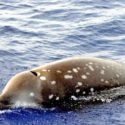
Scientists used passive acoustic monitoring during 2010-2013 to detect the presence of beaked whales in the Gulf of Mexico. These animals are difficult to study visually because they spend little time at the sea surface and are only present in offshore deep waters; they are rarely found on the continental shelf and near-shore waters.

Research on Oil Biodegradation and Monitoring that Informs Spill Response

Posted on May 4, 2015
The Deepwater Horizon oil spill and the remediation efforts that followed raised many concerns about impacts on coastal and ocean environments.

Publications

Study Finds Oil Associated with Marine Particulate Matter Transforms Rapidly
Identifying oil/marine snow associations in mesocosm simulations of the Deepwater Horizon oil spill event using solid-state 13 C NMR spectroscopy. Hatcher, P.G.; Obeid, W.; Wozniak, A.S.; Xu, C.; Zhang, S.; Santschi, P.H.; Quigg, A. Marine Pollution Bulletin, Volume 126, January 2018, Pages 159-165

Study Establishes Benthic Resilience to Oil Contamination by Benthic Foraminifera Density, Species Richness, and Heterogeneity
Resilience of benthic foraminifera in the Northern Gulf of Mexico following the Deepwater Horizon event (2011-2015). Schwing, P.T.; O'Malley, B.J.; Hollander, D.J. Ecological Indicators, Volume 84, January 2018, Pages 753-764

Data

Surface Current Data from USM CODAR High Frequency Radar, 2007-2017 -- data link

The effect of sedimentary oil degradation on O2 consumption and CO2 production measured using an in situ flux chamber at Pensacola Beach, June 2014 -- data link

Dataset for: The Dynamics of Cuba Anticyclones (CubANs) and Interaction With the Loop Current/Florida Current System -- data link

Announcements

June 11-15 GOMA All Hands Meeting St. Petersburg, FL
Click on these links for specific information:  registration, schedule, and team agendas. 

Sea Grant Releases 8-Page Brochure on Oil and Microbes: What's the Connection?
A new Sea Grant publication explains the role that microbes play in using oil as an energy source and removing it from the environment. It also describes how the microbes’ behavior can differ depending on their species, the type of oil they encounter, and the place they live in the marine environment. 

Want Hard Copies of Sea Grant Oil Spill Outreach Publications?
There are a limited number available. Contact team communicator Tara Skelton at tara.skelton@usm.edu to inquire about having certain titles shipped to you at no charge. You can view all of the Sea Grant oil spill outreach publications here. 

Project Activities

CARMMHA Researcher Describes Rescue of Entangled Dolphin
During a previous routine capture-and-release in 2017, researchers discovered a dolphin with fishing line wrapped around its head. Barataria Bay Capture Lead Eric Zolman explains how the members of his team provided medical intervention to the animal.
 
C-IMAGE Researcher Features on GulfCast Podcast
Dr. Kait Frasier recently appeared on the show to discuss how she uses marine mammal sounds to determine which species were present during the Deepwater Horizon spill and how they are functioning in their habitat present-day.
 
ECOGIG Documentary Now Available for Streaming
“Jewels of the Gulf,” a 16-minute documentary highlighting the consortium’s research into Deepwater Horizon’s continued impacts on deep-sea corals. The video is available on the group’s Vimeo.
 
RECOVER Researcher Visits East Bay High School
Dr. Rachael Heuer recently visited East Bay High School in Gibsonton, Florida, where she was once a science teacher, to educate students on her RECOVER research and have students interact with mahi-mahi embryos and Aplysia (California Sea Hare).