GoMRI eNews · Mar 6, 2018 · ← All issues
Welcome to the GoMRI eNews.

Keeping you current on emerging Gulf science and the people investigating the effects of oil spills on the environment and public health.

March 6, 2018                                                                    GoMRI eNews

Stories

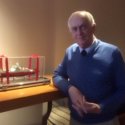
GoMRI Mourns the Passing of Dr. Matthew Howard

Peter Brewer Honored with International Scientific Cooperation Award

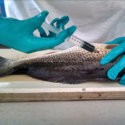
Study Investigates Species-Specific Differences in Fish Metabolism of Deepwater Horizon Oil

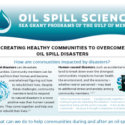
Sea Grant Releases Fact Sheet on Community Response to Oil Spills

From the Archives

Five-Year Study Finds Deepwater Horizon Negatively Affected Periwinkle Snails

Posted on February 28, 2017
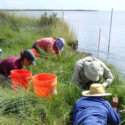
Scientists conducted a meta-analysis on marsh periwinkle snails using data spanning five years to investigate how the oil spill affected them over time. The researchers found that snails from heavily-oiled sites exhibited decreased density and shell length.

Researchers Seek New Insights from Decades-Old Spill

Posted on February 18, 2016
The Ixtoc I blowout happened in the Bay of Campeche over thirty-five years ago, so why are scientists studying this spill now? Because understanding what happened to Ixtoc I oil may help predict if and how Deepwater Horizon oil will degrade, persist, and impact northern Gulf of Mexico ecosystems over the next few decades.

Publications

Modeling Study Shows Rotation and Buoyancy Effects on Plume Dynamics
Numerical simulations of rotating bubble plumes in stratified environments. Fabregat Tomas, A.; Poje, A.C.; Ozgokmen, T.M.; Dewar, W.K. Journal of Geophysical Research: Oceans, Volume 122, Issue 8, August 2017, Pages 6795–6813

Study Describes Environmental Factors that Influence Selection of Oil Degrading Microbes
Potential environmental factors affecting oil-degrading bacterial populations in deep and surface waters of the northern Gulf of Mexico. Liu, J.; Bacosa, H.P.; Liu, Z. Frontiers in Microbiology, Volume 7, 2017, Article 2131

Data

Louisiana marsh Leaf Area Index (LAI) from Landsat, July - September 2015 -- data link

2017 Community Health Worker Supervisor Quarterly Evaluation Forms, Alabama and Louisiana -- data link

Modeling study of oil transport to seafloor by sinking diatom aggregates following an intense bloom -- data link

Announcements

EPA's Fish & Shellfish Program Shares Outreach of Oil Spill Research
Their latest newsletter features the Sea Grant Oil Spill Fact Sheet on Beach, Water, and Safety. The newsletter also features the University of Southern Mississippi's CONCORDE outreach of scientists involving local fisherfolks to improve trust.  Thanks, EPA!

Sea Grant Seminar on Marine Mammals, March 29, Galveston, TX
The free seminar, "Oil spill response, assessment, and restoration: Marine mammals," will cover the latest science concerning marine mammal populations, focusing on their health after oil spills and protocols relating to response, assessment, and restoration. A discussion about integrating science, response, and management for marine mammals will follow talks from the guest speakers. You can attend in person or online via a webinar. More information here. 

Want Hard Copies of Sea Grant Oil Spill Outreach Publications?
There are a limited number available. Contact team communicator Tara Skelton at tara.skelton@usm.edu to inquire about having certain titles shipped to you at no charge. You can view all of the Sea Grant oil spill outreach publications here. 

Project Activities

CARTHE Teams Up with Local Students to Release Drift Cards
Students from MAST Academy and Miami-Dade County Public Schools helped CARTHE researchers release drift cards into the Biscayne Bay as part of the consortium’s BayDrift project. Watch a clip of the release here.
 
Get to Know CWC Researcher Shivakumar Shivarudrappa
Dr. Shivarudrappa examines the taxonomic identification of benthic invertebrate fauna to assess how the 2010 Deepwater Horizon oil spill impacted their community. Learn more about his research and scientific journey here.
 
DEEPEND Timeline Highlights Deepsea Biodiversity Observed During Cruises
The consortium performed 99 trawl deployments (over 500 samples) during five Gulf of Mexico research cruises. The photographic timeline progresses through catches from different cruise trawls to highlight deepsea biodiversity, including some extremely rare deepsea species..
 
RECOVER Releases Second Virtual Lab Installment
The new addition to the RECOVER Virtual Lab allows users of all ages and educational backgrounds to analyze data collected by researcher Jason Magnunson to see how crude oil impacts the vision of mahi-mahi, red drum, and sheepshead minnow.