|
|
|
|
February 20, 2018 GoMRI eNews
|
|
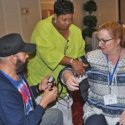
Researchers evaluated training sessions for community health workers that included disaster-related components to provide improvements in their curricula. Feedback from participants and staff identified public health, cultural competency, community advocacy, and peer listening as the most useful training modules.
|
|
|
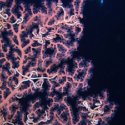
The Smithsonian’s Ocean Portal published an article about deep sea coral affected by the Deepwater Horizon incident and how their recovery is linked to the sea creature that lives on them. The ECOGIG research consortium are monitoring the health of these corals over time using high-resolution imagery, and they have made some amazing discoveries.
|
|
|
Researchers simulated the sinking of marine particle aggregates in oil-dispersant mixtures to assess how Corexit chemical dispersant affects specific biological processes involving marine oil snow formation. The team found that Corexit could significantly enhance or inhibit marine oil snow formation depending on application timing and location and interactions with other water column compounds, making its influence difficult to predict.
|
|
|
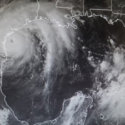
The 2017 hurricane season was one of the most active and destructive on record and included two major storms that affected the U.S. Gulf Coast – Harvey and Irma. Scientists who lead consortia funded by the Gulf of Mexico Research Initiative are based in this area, and they shared how they and their teams prepared for and fared after the storms.
|
|
|
Posted on February 16, 2017
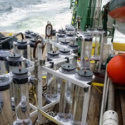
Researchers measured polycyclic aromatic hydrocarbon (PAH) concentrations in water collected near the Deepwater Horizon site to understand how sinking particles, such as marine snow, influence the residence time of PAHs in the upper ocean.
|
|
|
Posted on February 16, 2016
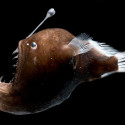
DEEPEND expands knowledge as a restoration tool for the Gulf’s largest ecosystem. Much uncertainty remains about impacts on the deep-sea environment from the 2010 oil spill that erupted more than 5,000 feet below the sea surface. However, knowing what was affected or what may change in the future is particularly difficult with little to no pre-existing knowledge about this obscure ecosystem. Environmental impact assessments of an area require some baseline of what lives and happens there.
|
|
|
Study Finds Oil, Temperature, UV Radiation Affect Mahi-Mahi Buoyancy and Oxygen Consumption
Combined effects of oil exposure, temperature and ultraviolet radiation on buoyancy and oxygen consumption of embryonic mahi-mahi, Coryphaena hippurus. Pasparakis, C.; Sweet, L.E.; Stieglitz, J.D.; Benetti, D.; Casente, C.T.; Roberts, A.P.; Grosell, M. Aquatic Toxicology, Volume 191, October 2017, Pages 113-121
Study Highlights Dynamic Cycling of DOC in Gulf of Mexico Basin
Stable and radiocarbon isotopic composition of dissolved organic matter in the Gulf of Mexico. Walker, B.D.; Druffel, E.R.M.; Kolasinski, J.; Roberts, B.J.; Xu, X.; Rosenheim, B.E. Geophysical Research Letters, Volume 44, Issue 16, 28 August 2017, Pages 8424–8434
|
|
Neuston sample collection data in the northern Gulf of Mexico, cruise PTS03, July 2016 -- data link
2016 U.S. Navy Marine Mammal Program bottlenose dolphin (Tursiops truncatus) reproductive health data -- data link
Study of chaotic behavior of breaking waves by laboratory experiments and numerical simulation -- data link
|
|
Call for Papers (MTS Journal) and Webinar Registration (Advancing Oil Spill Research and Response)
TechSurge brought together the GoMRI and Marine Technology Society (MTS) communities in February at New Orleans to share research results and discuss how they might work together to better prepare for future events.
- A special edition of the MTS Journal will capture the science, engineering, and technologies presented during the TechSurge meeting. A call for papers welcomes contributors unable to attend the meeting with applicable information for the GoMRI and MTS communities. Information for submitting manuscripts can be found at www.mtsociety.org/author_info/. Authors who intend to submit a manuscript must complete an author information form (at same website) and return it to Amy Morgante (morganteeditorial@verizon.net) as soon as possible. Manuscripts are due June 20. For comments, suggestions, or requests, please email the Guest Editors: Dana Yoerger (dyoerger@whoi.edu), Steve Murawski (smurawski@usf.edu); Liesl Hotaling (lieslhotaling@yahoo.com); or MTS journal managing editor Amy Morgante (morganteeditorial@verizon.net).
- A webinar on Advancing Oil Spill Research and Response Part 2 will be held on March 13 (register here).
Feb 23 Abstract Submission Deadline for ASLO Special Session "Oil and Water Do Mix"
Drs. Ed Buskey and Ken Lee are chairing a special session at the Association for the Sciences of Limnology and Oceanography (ASLO) 2018 Summer meeting, June 10-15, 2018, Victoria, B.C., Canada. They invite researchers to submit abstracts for their session titled: Oil and water do mix: The fate, behavior, and impact of dispersed oil droplets in the sea. Read about the session here. Read an overview of submission requirements here.
Save the Date! March 29 Sea Grant Seminar on Oil Spills and Marine Mammals
The Sea Grant Oil Spill Outreach Team will host Oil spill response, assessment, and restoration: Marine mammals at the Flower Garden Banks National Marine Sanctuary Headquarters in Galveston, Texas. The event will be free and open to the public and will also be broadcast live as a webinar. More information will be available soon at https://gulfseagrant.org/oilspilloutreach.
|
|
|
|
|
|
|