|
|
|
|
October 3, 2017 GoMRI eNews
|
|
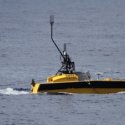
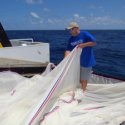
Scientists conducted passive acoustic monitoring (PAM) of whales in the northern Gulf of Mexico using two autonomous surface vehicles (ASVs) capable of recording marine mammal sounds.
|
|
|
The Gulf of Mexico Research Initiative (GoMRI) is pleased to announce a new Sea Grant informational publication that discusses the locations where approximate amounts of oil went after the Deepwater Horizon spill. The publication Deepwater Horizon: Where did the oil go? summarizes what researchers have discovered about where the spilled oil traveled and what processes carried it along its path.
|
|
|
The Gulf of Mexico Research Initiative (GoMRI) is pleased to announce the 31 awardees of the program’s final two-year grants to support research on effects of the Deepwater Horizon oil spill.
|
|
|
An interdisciplinary panel of 23 experts in oceanography, ecology, physics, and geospatial-mapping combined their knowledge of pelagic faunal distribution patterns to create a biogeographic map of the world’s deep oceans. The panel identified 33 distinct mesopelagic (200-1000 meters depth) ecoregions that reflect regional variation of biodiversity and function.
|
|
|
Posted on September 27, 2016
Scientists from the University of Texas Marine Science Institute demonstrated how natural sunlight affects Gulf of Mexico microbial communities in the presence of Corexit (dispersant) and crude oil. They observed that sunlight significantly reduced the diversity of bacterial communities in the presence of oil, Corexit, or both.
|
|
|
Posted on September 30, 2015
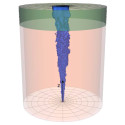
Scientists assessed subsurface hydrocarbon plume simulations to understand the role of released gases on plume behavior.
|
|
|
Posted on September 19, 2014
David Christiansen is dedicated to investigating water movement and using those findings to improve local water systems.
|
|
|
Study Finds Marsh Loss from Oiling Leads to Substantial Loss in Nitrogen Removal
Vegetation loss decreases salt marsh denitrification capacity: Implications for marsh erosion. Hinshaw, S.E.; Tatariw, C.; Flournoy, N.; Kleinhuizen, A.; Taylor, C.; Sobecky, P.A.; Mortazavi, B. Environmental Science & Technology, 2017, 51 (15), pp 8245–8253
Study Provides Molecular Resources to Investigate Developmental Toxicity of Oil in Mahi-Mahi
Novel transcriptome assembly and comparative toxicity pathway analysis in mahi-mahi (Coryphaena hippurus) embryos and larvae exposed to Deepwater Horizon oil. Xu, E.G.; Mager, E.M.; Grosell, M.; Hazard, E.S.; Hardiman, G.; Schlenk, D. Scientific Reports, 2017, 7, Article number: 44546
|
|
The effects of sunlight on the composition of exopolymeric substances affecting the subsequent aggregation process during oil spill and Corexit exposure -- data link
BIONESS profile and plankton sample collection data, cruise PTS02, northern Gulf of Mexico, March–April 2016 -- data link
Bottom-water area of Louisiana-Texas continental shelf hypoxia 1985-2014 -- data link
|
|
|
RFP IV Update: Consortium for Resilient Gulf Communities - CRGC (Finucane) - The Consortium for Resilient Gulf Communities assesses and addresses the impacts of the 2010 Deepwater Horizon (DH) oil spill on the health, social, and economic wellbeing of people in the Gulf Coast region. Our research is aimed at helping communities across the Gulf Coast to more effectively understand, withstand, and overcome the multiple stressors brought on by such disasters.
|
|
|
News from the Sea Grant Oil Spill Science Outreach Team
- October 26 Seminar in Biloxi, MS: Responding to Oil Spills: Coastal Wetlands Habitats Researchers and emergency responders will explain how science is incorporated into response efforts and discuss ways this process may be improved. Read the agenda, register to attend in person or online or log on to the live, interactive webinar.
- New Outreach Publication: Deepwater Horizon: Where Did the Oil Go? This publication summarizes what scientists have discovered about the fate of the Deepwater Horizon oil.
- New Factsheet: Is It Safe? Examining Oil Spill Health Risks from the Deepwater Horizon Oil Spill This fact sheet outlines what scientists discovered post-spill about the safety of beaches, water, and seafood.
- Seminar Videos: Oil Spill Science for Healthy Island Communities These are videos of the outreach team's recent seminar with their Caribbean partners in St. Croix, U.S. Virgin Islands, and San Juan, Puerto Rico. There, they shared oil spill science lessons from the Gulf of Mexico related to wildlife and habitat impacts, oil movement, and public health.
- Translated Boater's Guide to Handling Oil and Fuel Spills The guide is now available in Spanish and Vietnamese. A version with information specific to Puerto Rico is online.
|
|
|
|
|
|
|