|
|
|
|
July 11, 2017 GoMRI eNews
|
|
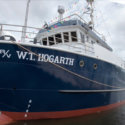
The Gulf of Mexico Research Initiative (GoMRI) is pleased to announce that a new state-of-the-art scientific research vessel has been named in honor of Research Board member William “Bill” T. Hogarth. The R/V W.T Hogarth will support the research of over two dozen institutions and agencies across Florida and will be used for refined bottom mapping, metal tracing, surveying, collecting samples, and more.
|
|
|
The Gulf of Mexico Research Initiative (GoMRI) is pleased to announce a new Sea Grant informational brochure just in time for the summer boating season. The one-page guide gives boaters information on how to prepare for, respond to, and report an accidental oil or fuel spill on their vessels.
|
|
|
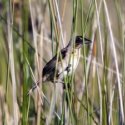
Scientists analyzed the carbon composition in Seaside Sparrow tissues to learn if oil from the 2010 spill was incorporated into the terrestrial food web. The researchers found reduced radiocarbon and stable carbon concentration levels in the feathers of birds captured at oiled sites compared with birds from non-oiled sites, which is consistent with a fossil oil source.
|
|
|
Sakib Mahmud tests combinations of passive acoustic monitoring equipment to find the best method to detect and measure marine mammal populations affected by the Deepwater Horizon oil spill. His findings will help improve our understanding of long-term environmental impacts of the spill on deep-diving marine mammals and aid in improving oil spill regulations, monitoring, and mitigation efforts.
|
|
|
Posted on July 5, 2016
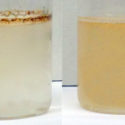
Oil spill responders currently have the option to treat oil spills with a synthetic dispersant called Corexit, however scientists continue to search for alternatives. In this search, scientists seek to develop an understanding of the specific mechanisms that drive dispersion and identify an effective combination of food-grade components.
|
|
|
Posted on July 9, 2015
Scientists measured the natural abundance of radiocarbon (14C) in sediments near the Deepwater Horizon spill site and estimated the location and amount of carbon derived from crude oil or gas.
|
|
|
Posted on July 8, 2014
Kait Frasier listens to Gulf marine mammals to estimate how many there are and find out if their numbers are changing after the Deepwater Horizon oil spill. Kait sees dolphins as a good species to study because “everyone can see and understand them, not just scientists.”
|
|
|
Proceedings Describe How ASVs Improve Marine Mammal Monitoring
Using autonomous surface vehicles for passive acoustic monitoring (PAM). Ziegwied, A.; Dobbin, V.; Pierpoint, C.; Sidorovskaia, N.; Dyer, S. OCEANS 2016 MTS/IEEE Monterey, CA, 2016, pp. 1-5. doi: 10.1109/OCEANS.2016.7761380
Study Shows Lagrangian Coherent Structures Act as Barriers in Upper Ocean Transport, but Can Leak
Impact of submesoscales on surface material distribution in a Gulf of Mexico mesoscale eddy. Haza, A.C.; Ozgokmen, T.M.; Hogan, P. Ocean Modelling, Volume 107, 2016, Pages 28-47, ISSN 1463-5003
|
|
The growth change of dinoflagellate Karenia brevis after the addition of altered bacterial communities exposed to crude oil and light -- data link
Bathymetric Dynamic Digital Elevation Model for the Northern Gulf of Mexico -- data link
|
|
|
RFP IV Update: Aggregation and Degradation of Dispersants and Oil by Microbial Exopolymers (Quigg) - To understand how the presence of hydrocarbons triggers production of exopolymeric substances (EPS) that may protect organisms from the oil, emulsify the oil, or both, therefore altering its degradation.
|
|
|
CARTHE Participates in Biscayne Bay Marine Health Summit
Consortium researchers met with government officials, advocates, and other scientists to develop a 10-year plan to mitigate contaminants and seagrass die-off in Biscayne Bay.
C-IMAGE Researcher Ortega-Ortiz Blogs One Gulf Expedition Experiences
Joel Ortega-Ortiz is helping develop an ecosystem model to predict oil spills’ long-term impacts in the southern Gulf of Mexico. He uses the One Gulf expedition’s fishing data to understand how fish and people interact over the decades.
CRGC Releases RAND Summer Newsletter
The RAND Gulf States Policy Institute’s Summer Newsletter includes an interview with CRGC outreach coordinator Elizabeth Thornton and highlights the consortium’s latest research, outreach, and education activities.
CWC Launches Blog Series Featuring Undergraduate Interns
The consortium’s Research Experience for Undergraduates (REU) Program helps student interns interested in scientific careers gain experience conducting research in the field. CWC will profile these students and their research through a series of blog and social media posts. Learn more about the program here!
ECOGIG Wraps Up Jewels of the Gulf Expedition
Despite an early ending due to Tropical Storm Cindy, expedition researchers were able to complete twelve ROV dives, image hundreds of deep-sea corals, and collect multiple live coral, sediment, and water samples.
LADC-GEMM Undergraduate Student Reflects on Summer Cruise Experience
Matt Firneno recently completed Bachelor’s degrees in physics and mathematics at the University of New Orleans. He participated in LADC-GEMM’s recent research cruise aboard R/V Pelican, where he assisted learned about different forms of data acquisition and real-time data analysis. Learn more about his research and experiences here.
|
|
|
|
|
|
|