|
|
|
|
June 27, 2017 GoMRI eNews
|
|
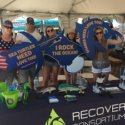
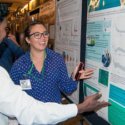
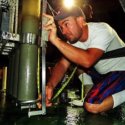
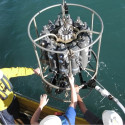
Recently, researchers and outreach staff from Consortia funded by the Gulf of Mexico Research Initiative (GoMRI) participated in a variety of events to share science related to the Deepwater Horizon oil spill. Here’s a picture tour that shows teams helping the public learn more about Gulf of Mexico research.
|
|
|
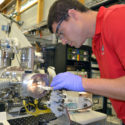
Marine oil snow is the largest commuter of carbon to the seafloor and occurs when oil and marine particles aggregate and sink through the water column. Previous studies show that oil and dispersant significantly increased marine microorganisms’ production of exopolymeric substances (EPS), an extremely sticky goo that holds marine snow together. Maya Morales-McDevitt conducts mesocosm experiments investigating how certain naturally occurring nutrients influence EPS production and oil degradation.
|
|
|
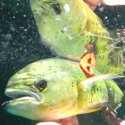
The Smithsonian recently published an article about research, funded by the Gulf of Mexico Research Initiative (GoMRI), that investigates oil spill impacts on different life stages of mahi mahi. Highlights include what is involved in conducting this cutting-edge research, what is being discovered about mahi mahi that is not oil-spill related, and the multiple scientific perspectives that help develop a comprehensive understanding of these important fish.
|
|
|
Scientists analyzed sediment cores from two sites near the Macondo wellhead to characterize possible spill impacts on benthic foraminifera (single celled organisms with a hard shell). The team found elevated Polycyclic Aromatic Hydrocarbon (PAH) concentrations and a significant decrease in density and species diversity for foraminifera.
|
|
|
Posted on June 7, 2016
Responders to the Deepwater Horizon spill used large quantities of dispersant to facilitate oil biodegradation, but could a different method be safer for the environment?
|
|
|
Posted on June 16, 2015
A fourth grade class at Singapore American School found Bob the Drifter and the CARTHE science group while researching ocean science and pollution online.
|
|
|
Posted on June 13, 2014
Scientists from Texas, Delaware, and Louisiana conducted a multiyear study examining coastal waters in the Gulf of Mexico to determine if hydrocarbons from the Deepwater Horizon oil spill had changed the water column chemistry.
|
|
|
Study Examines Combined Effects of Hypoxia and Oil Exposure on Sheepshead Minnow
Hypoxia depresses CYP1A induction and enhances DNA damage, but has minimal effects on antioxidant responses in sheepshead minnow (Cyprinodon variegatus) larvae exposed to dispersed crude oil. Dasgupta, S.; DiGiulio, R.T.; Drollette, B.D.; L. Plata, D.; Brownawell, B.J.; McElroy, A.E. Aquatic Toxicology, Volume 177, August 2016, Pages 250–260
Study Analyzes Metabolic Pathways of Oil-Degrading Bacteria
Reconstructing metabolic pathways of hydrocarbon-degrading bacteria from the Deepwater Horizon oil spill. Dombrowski, N.; Donaho, J.A.; Gutierrez, T.; Seitz, K.W.; Teske, A.P.; Baker, B.J. Nature Microbiology, Volume 1, Issue 7, May 2016, Article Number 16057
|
|
Dataset for: The impact of dissolved inorganic nitrogen and phosphorous on responses of microbial plankton to the Texas City “Y” oil spill in Galveston Bay, Texas -- data link
Ensemble of HYCOM simulations of the Gulf of Mexico to study uncertainties stemming from uncertain initial conditions using the Polynomial Chaos approach -- data link
R/V Tommy Munro: TM16-05 Hydrographic (CTD) Data, Gulf of Mexico, May 16 - 20, 2016 -- data link
|
|
|
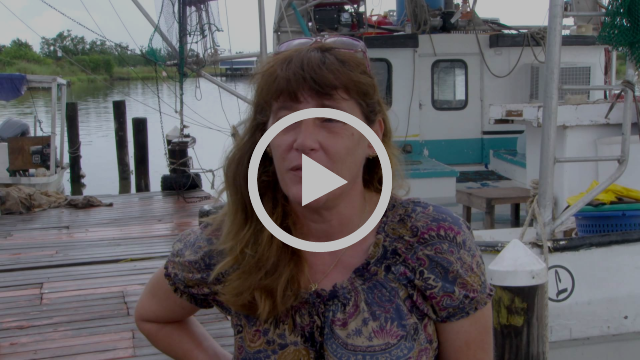
Watermen of the Gulf (Dispatches from the Gulf) - Fisherfolk share their feelings about working and living along the Gulf of Mexico. "Dispatches from the Gulf" is a new Journey to Planet Earth (J2PE) episode that investigates the impact of the Deepwater Horizon oil spill on the ecosystems and communities along the Gulf of Mexico.
|
|
|
C-IMAGE Highlights Post-Doc Kristina Deaks’ Research Experience
The consortium's blog post interviews Kristina Deak about her recent work aboard the R/V Weatherbird studying fish’s immune systems and oil's effects on their resilience.
CONCORDE Principal Investigator to Lead Ocean Task Force
Dr. Monty Graham was recently named Chairman of the Ocean Task Force formed by Governor Phil Bryant. The Task Force will identify partnerships and resources to increase Mississippi’s training in and support of Unmanned Maritime Systems.
CWC Video Offers R/V Pelican Tour
The clip invites those that were unable to attend the recent Meet the Fleet event to tour the research vessel alongside Board of Regents members and learn about the research that scientists conduct during cruises.
DROPPS Attends University of Texas Summer Science Event
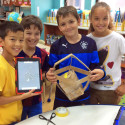
The team placed Sargassum seaweed in viewers that allowed students to observe the microorganisms living among the algae and used a color-coded Jenga game to represent the consequences of losing different portions of the ecosystem. See photos from the event here.
Meet the ECOGIG Scientists Behind the Jewels of the Gulf Expedition
A recent consortium news item introduces the researchers working on the Jewels of the Gulf research activity, which assesses the effects of oil, methane, and chemical dispersants on deep-sea corals. Learn more about these scientists here.
Video Highlights CARTHE Collaboration to Monitor Taylor Oil Leak
The clip depicts joint field operations between CARTHE researchers and organizations including Water Mapping LLC, NOAA, NASA, the Norwegian Meteorological Institute (MET), and MDA Corporation (Canada) to sample the Taylor Energy spill site in the northern Gulf of Mexico. Watch the video here.
LADC-GEMM Blog Post Introduces “Will” the Seaglider
“Will” is an underwater autonomous vehicle that will survey and collect acoustic Gulf of Mexico data for approximately eight weeks. Every four hours, the glider surfaces, relays information back to a base station at Oregon State University, and descends again to collect more information. Read more about this technology here.
|
|
|
|
|
|
|