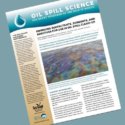
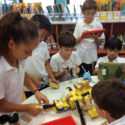
The Gulf of Mexico Research Initiative (GoMRI) is pleased to announce a new Sea Grant informational brochure that explores products currently available or in development to remove oil from water in future spills.
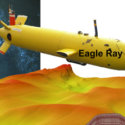
Mississippi scientists surveyed natural seeps near the Macondo blowout using a high-resolution autonomous underwater vehicle (AUV) to inform biogeochemical studies about the post-Deepwater Horizon water column and seafloor.
Posted on April 20, 2016
Communicating oil spill research is essential to improve society’s understanding about spills and their ability to respond to and mitigate them. The Gulf of Mexico Research Initiative (GoMRI) has been funding spill-related research since 2010.
Posted on April 7, 2015
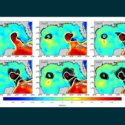
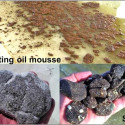
Auburn University scientists documented submerged oil mats and surface residual balls (also known as tar balls) on Alabama’s sandy beach systems and analyzed the physical and chemical evolution of compounds matching the characteristics of Macondo oil.
Posted on April 18, 2014
Since August 2011, eight research consortia funded by the Gulf of Mexico Research Initiative (GoMRI) have been working hard to understand impacts from and responses to the Deepwater Horizon incident.
Characterization of the microbial nanocultures -- data link
LIDAR and Hyperspectral Data Collection Over Barataria Bay, Louisiana, August 2015 -- data link
BIONESS profile and plankton sample collection data, cruise PTS01, northern Gulf of Mexico, October – November 2015 -- data link
Video
Close Encounters with a Sperm Whale (Dispatches from the Gulf)Professor Scott Socolofsky (Texas A&M University) witnesses an unexpected visitor of the cetacean kind while conducting deep-sea research in the Gulf of Mexico.
Announcements
Sea Grant Releases Brochure on Bottlenose Dolphins
Scientists documented an increased number of stranded dolphins in the northern Gulf of Mexico in 2010. Was oil exposure from the Deepwater Horizon spill to blame? Could other factors have been in play? This brochure provides a synopsis of the science that can help answer these and other questions.
Sea Grant Releases Brochure on Sea Turtles
Sea turtles are some of the world’s most well-known endangered and threatened animals. This brochure addresses what have we learned about the impact that the Deepwater Horizon spill had on sea turtles in the Gulf.
Now Available - Videos of the "Sea Turtles and Oil Spills" Presentations
The Sea Grant Oil Spill Outreach Team hosted a workshop on March 23 in Brownsville, TX, with more than 100 participants. Scientists, responders, and specialists explained what we know about how sea turtles fared after the Deepwater Horizon oil spill. They also discussed ongoing conservation programs.
Project Activities
ACER Spotlights Boom Trawling and Longlining
The consortium focused a recent “Tool Talk” blog post on two common types of fishing methods that scientists use to collect data on the abundance and size of various fishes.
PRI’s Living on Earth Highlights C-IMAGE Research
Public Radio International’s Steve Curwood recently interviewed consortium scientists about their work revisiting the Ixtoc I spill and how it will and has informed our understanding of oil spills’ long-term effects. Listen to and read the interviews here and here.
CONCORDE Leads Expedition for Early Career Scientists
The consortium led an expedition to Deer Island to teach early career scientists about the island’s history and how to create an elevation profile using elevation rods. They also explored the island to observe changes from one side to the other.
ECOGIG Researcher Named Distinguished Professor
Dr. Jeffrey Chanton recently received Florida State University’s highest honor and was selected as the 2017-2018 Robert O. Lawton Distinguished Professor. He has been with the university 29 years and is an acclaimed climate scientist and American Geophysical Union fellow. Congratulations, Jeff!