|
|
|
|
January 10, 2017 GoMRI eNews
|
|
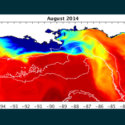
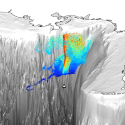
The flow of the Mississippi River into the northern Gulf of Mexico may have caused circulation patterns and fronts that significantly influenced the transport and fate of Deepwater Horizon oil. However, the Gulf’s complex topography and the proximity of variable oceanic currents to the Mississippi Delta make it difficult to monitor and model these processes.
|
|
|
The Gulf of Mexico Research Initiative is pleased to announce a new informational brochure about how the Deepwater Horizon oil spill affected the mental health of some Gulf Coast residents.
|
|
|
Posted on January 12, 2016
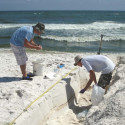
Months and years after the Deepwater Horizon oil spill, many people wondered where the oil went or where it might be lingering or what it may affect after it was no longer visible. Scientists are using genomic techniques such as DNA sequencing to help answer some of these questions.
|
|
|
Posted on January 6, 2015
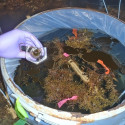
Alabama scientists investigated oil spill effects on floating Sargassum, a critical seaweed habitat for many important Gulf species.
|
|
|
Posted on January 13, 2014
Researchers have known that pollutant exposure alters the ability of ecological systems to degrade those pollutants upon encountering them again.
|
|
|
Posted on January 3, 2013
Scientists studying the use of sub-sea chemical dispersants during the Deepwater Horizon spill published their recent findings.
|
|
|
Study Characterizes River Plume Mixing in Coastal Waters
On the nature of the frontal zone of the Choctawhatchee Bay plume in the Gulf of Mexico Huguenard, K.D.; Bogucki, D.J.; Ortiz-Suslow, D.G.; Laxague, N.J.M.; MacMahan, J.H.; Ozgokmen, T.M.; Haus, B.K.; Reniers, A.J.H.M.; Hargrove, J.; Soloviev, A.V.; Graber, H. Journal of Geophysical Research: Oceans, Volume 121, Issue 2
February 2016, Pages 1322–1345
Five-Year Study Finds Deepwater Horizon Impacted Periwinkle Snails
Five years of Deepwater Horizon oil spill effects on marsh periwinkles (Littoraria irrorata) Zengel, S.; Weaver, J.; Pennings, S.; Silliman, B.; Deis, D.; Montague, C.; Rutherford, N.; Nixon, Z.; Zimmerman, A. Environmental Science & Technology, 2016, 50 (2), pp 643–652
|
|
Dataset For: Incorporation of Deepwater Horizon oil in a terrestrial bird -- data link
Shipboard ADCP, underway near surface meteorology and hydrography, G09 cruise, south of the Mississippi River Delta in April 2015 from the R/V Pelican cruise PE15-21 -- data link
Bacterial community composition of surface residual tarballs in Galveston and Mustang Islands following the Texas City "Y' spill -- data link
|
|
|
GoMRI RFP-V: Resilience Attributes for Children, Youth, and Communities in Deepwater Horizon (Slack)
Project is lead by P.I. Tim Slack, Louisiana State University.
|
|
|
ACER Word Wednesday Series Discusses “Trophic Cascade”
The recent article explains that changes to one level in a food chain can sometimes result in changes in other levels, called a trophic cascade. Trophic cascades can be top-down (changes in the top trophic level impacted levels down the food chain) or bottom-up (changes in the bottom trophic level impacted levels up the food chain).
Meet C-IMAGE Student of the Month Susan Snyder
Snyder is a marine science Ph.D. student at the University of South Florida. Her research focuses on how exposure to oil, particularly oil’s more toxic polycyclic aromatic hydrocarbon (PAH) components, affects fish health.
DEEPEND Infographic Poster Visualizes Vertical Migration
DEEPEND investigators served as consultants for their partner Oregon Coast Aquarium’s educational infographic about diel vertical migration – the largest animal migration phenomenon on earth. The consortium has printed several copies of the poster to distribute to teachers as well as a large banner for use during outreach events. Download your own copy of the poster here!
Visit the RFP-V Foil Project Website!
The site provides information about the project’s background, methods, and developing findings regarding the use of horse flies as bioindicators of marsh health.
|
|
|
|
|
|
|