|
|
|
|
October 18, 2016 GoMRI eNews
|
|
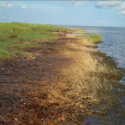
Louisiana State University scientists quantified Louisiana island erosion pre- and post-Deepwater Horizon to determine the shoreline retreat rate when oiled, the length of time that oiling effects lasted, and whether or not there was recovery.
|
|
|
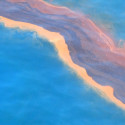
University professors developed a team-based educational project using satellite images of Deepwater Horizon surface slicks to introduce first-year computer science students to socially-relevant problem solving.
|
|
|
Living inside the roots and leaf tissues of marsh grass are bacteria and fungi known as endophytes that help promote plant growth. Since some endophytes can also help degrade petroleum that the plants absorb, it is possible they could be a natural tool to help clean up oil buried in marsh soils.
|
|
|
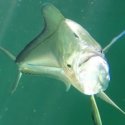
Scientists used novel bioinformatics to investigate molecular-level changes over time and toxicity pathways in mahi-mahi embryos and larvae exposed to Deepwater Horizon oil. They observed that weathered oil induced more pronounced gene expression changes than a non-weathered source oil.
|
|
|
$65 million in grant funding to support research by individuals and consortia. RFP-VI will provide funding for Individual Investigator/Collaborations and Research Consortia for up to two years (2018-2019).
|
|
|
Posted on October 15, 2015
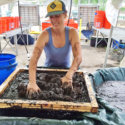
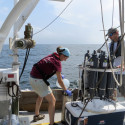
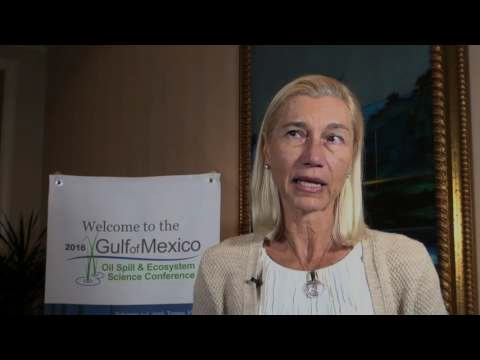
Ceil Martinec picks microscopic creatures out of mud collected from deep in the Gulf of Mexico. She is looking for possible lingering effects of the 2010 oil spill on sediment-dwelling animals and making some exciting discoveries along the way.
|
|
|
Posted on October 14, 2014
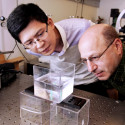
Scientists using a high-speed camera to observe bubbles bursting have gained new insight into the hydrodynamics of complex fluids.
|
|
|
Posted on October 7, 2013
Scientists at Florida State University are examining the mechanics behind oil transport, including changes to Sea Surface Temperature (SST) and the roughness of surface water that an oil slick could affect.
|
|
|
Study Describes New Meiofauna Species in Gulf of Mexico
A new species of Echinoderes (Kinorhyncha: Cyclorhagida) from the Gulf of Mexico, with a redescription of Echinoderes bookhouti Higgins,1964. Sorensen, M.V.; Herranz, M.; Landers, S.C. Zoologischer Anzeiger - A Journal of Comparative Zoology, May 2016, http://dx.doi.org/10.1016/j.jcz.2016.04.004
Study Uses DNA Analysis to Describe Deep Water Foraminifera
Molecular characterization of benthic foraminifera communities from the Northeastern Gulf of Mexico shelf and slope following the Deepwater Horizon event. Moss, J.A.; McCurry, C.; Schwing, P.; Jeffrey, W.H.; Romero, I.C.; Hollander, D.J.; Snyder, R.A. Deep Sea Research Part I: Oceanographic Research Papers, Volume 115, September 2016, Pages 1–9
|
|
Deepwater Horizon Event Biochemistry Data, Northern Gulf of Mexico, May - December 2010 - Data Link
Dataset for: Dynamic Interfacial Tension and Dilational Rheology of Dispersant Corexit 9500 - Data Link
Community composition of ammonia oxidizing bacteria in Louisiana salt marshes three years after the Deepwater Horizon oil spill (2013) - Data Link
|
|
|
GoMRI RFP-V: Influence of river induced fronts on hydrocarbon transport (Kourafalou)
Project is lead by P.I. Villy Kourafalou, University of Miami.
|
|
|
News for 2017 Gulf of Mexico Oil Spill & Ecosystem Science Conference
- Register now here. Early-bird registration deadline is November 23, 2016.
- 550 abstract submissions are currently under review; notifications should go out in mid-October.
- The online program should be available late November.
- Information on sponsorship and exhibitor opportunities is available here.
Nov 1-3, Tampa, FL: 2016 Clean Gulf Conference
The conference will cover best practices and lessons learned in spill prevention, preparedness and response for the exploration & production, transportation, and storage of oil and hazardous materials. C-IMAGE and Sea Grant will have workshops, and the GoMRI booth will be on display.
Nov 6-10, Orlando, FL: Society of Environmental Toxicology and Chemistry (SETAC) Meeting
This meeting provides cutting-edge scientific presentations, workshops, and networking opportunities to keep on top of emerging research, regulatory developments and the latest methodologies.
Nov 8, Grand Cayman: Gulf and Caribbean Fisheries Institute Annual Conference
Join the Sea Grant outreach specialists' workshop titled Oil Spill Science and Information Needs for Gulf and Caribbean Stakeholders at the conference. Click here to register for the Sea Grant workshop. Click here for more information about the conference.
Dec 11-15, New Orleans, LA: Restore America's Estuaries Summit
This national meeting focuses on coastal restoration, science, and management practices.
|
|
ACER “Habitat Focus” Series Explores Mangroves and Mangals
This entry in the series discusses the important contributions of coastal mangrove plants and mangrove swamps, known as mangals, to their environments.
CARTHE Drift Cards Begin Returning Data
The Bay Drift project released 320 drift cards from 8 locations across Biscayne Bay and received a 10% response rate from the cards first within the 10 days from locations ranging between Virginia Key and Sunny Isles Beach.
C-IMAGE Hosts Student Communication Weekend
iSeeChange founder Julia Drapkin helped the fifteen students from C-IMAGE, CARTHE, and RECOVER who attended the weekend retreat improve their science communication skills. They learned how to share their science with a personal connection, target an audience, and develop plans to use oceanography to aid current events.
CRGC Participates in Seminar on Building Resilient Communities
The Sea Grant-hosted oil spill science seminar discussed which traits made communities resilient after Deepwater Horizon, what lessons about overcoming disasters have been learned, and which resilience-building programs and resources are available to communities.
DEEPEND Celebrates Cephalopod Awareness Week
A recent post to their Kids’ Blog highlights some of the interesting Gulf of Mexico cephalopods that consortium researchers have captured, such as the bioluminescent firefly squid and see-through glass squid.
ECOGIG Researcher Featured at Oxford Science Café
Dr. Anne Diercks will attend the Science Café event to discuss the deep sea’s slow and steady sedimentation processes, including how the Deepwater Horizon oil spill caused anthropogenic oil marine aggregates to be deposited as an unprecedented amount of material on the seafloor.
|
|
|
|
|
|
|