|
|
|
|
September 20, 2016 GoMRI eNews
|
|
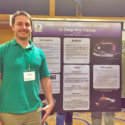
There are hundreds of deep-pelagic fish species in the Gulf of Mexico, but we know very little about their taxonomy, diversity, and population sizes. Max Weber plans to catch fifteen individual specimens of each of the 500 known deep-sea Gulf fish species to help us better understand these organisms and how the Deepwater Horizon oil spill may have impacted them and environment.
|
|
|
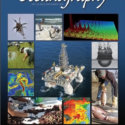
The Gulf of Mexico Research Initiative (GoMRI) is pleased to announce a special issue of Oceanography Magazine: GoMRI: Deepwater Horizon Oil Spill and Ecosystem Science. This special issue – a collaborative effort among scientists funded by GoMRI, the GoMRI Research Board, and the GoMRI management team – highlights scientific advances from the program.
|
|
|
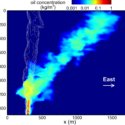
Deep ocean oil plumes that formed from the Deepwater Horizon spill and their subsequent rise through the water column were greatly influenced by physical mixing mechanisms such as turbulence, Langmuir circulations, and sub-mesoscale eddies.
|
|
|
Posted on September 10, 2015
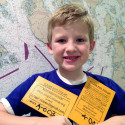
Fueled by a passion for science and endangered species, Alek designed and executed a research project that involved scientists from eight institutions, four-hundred drift cards, and over a year’s work. A substantial undertaking for any scientist, this is even more impressive because Alek is seven years old.
|
|
|
Posted on September 16, 2014
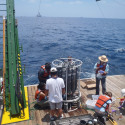
From March-December 2010 during ten research cruises covering over 105,000 square kilometers, scientists documented the fate and dynamics of Deepwater Horizon methane emissions around the blowout site.
|
|
|
Posted on September 10, 2013
Middle and high school teachers in Florida put on their sea legs, boarded the R/V Weatherbird II, and conducted science that matters to their students and communities.
|
|
|
Posted on September 10, 2012
Oil-spill science is not strictly business, it’s personal, too. The Deepwater Horizonoil spill felt very personal to Dr. Patrick Fitzpatrick a MSU scientist researching storm surges, who is also an avid saltwater fisherman living in south Louisiana.
|
|
|
Study Analyzes Segmented Worms for Impact of and Recovery from Oil Spill
Polychaete annelid (segmented worms) abundance and species composition in the proximity (6 to 9km) of the deep water Horizon (DWH) oil spill in the deep gulf of Mexico. Qu, F.; Nunnally, C.C.; Lemanski, J.R.; Wade, T.L.; Amon, R.M.W.; Rowe, G.T. Deep sea Research Part II: Topical Studies in Oceanography, Volume 129, July 2016, Pages 130–136
Study Describes Air-Sea Interactions When TS Isaac Intensified to a Hurricane
Observed air-sea interactions in tropical cyclone Isaac over Loop Current mesoscale eddy features. Jaimes, B.; Shay, L.K.; Brewster, J.K. Dynamics of Atmospheres and Oceans, 2016, http://dx.doi.org/10.1016/j.dynatmoce.2016.03.001
|
|
Associations of metal exposure in otoliths with lesion formation in offshore, northeastern Gulf of Mexico fishes collected after the Deepwater Horizon oil spill (2011-2013) - Data Link
Fresh marsh decomposition rates near Hammond Louisiana 2010-2013 - Data Link
Dataset For: Responses of bay anchovy (Anchoa mitchilli) larvae under lethal and sub-lethal scenarios of crude oil exposure - Data Link
|
|
|
|
GoMRI RFP-V: Oil Spill Transport in a Coupled Wind-Wave Current Environment (Drennan)
The Investigation of Oil Spill Transport in a Coupled Wind-Wave Current Environment Using Simulation and Laboratory Studies project is lead by P.I. William M. Drennan, University of Miami.
This project aims at studying the transport of oil droplets in upper oceans subject to actions of Langmuir cells and breaking waves and the transport of oiled sprays in wind over waves. The focus of study is on the effects of wind-wave-current interactions when the wave influences are significant, including hurricane conditions. The feedback mechanisms among wind, waves, and upper ocean currents and turbulence play an essential role in the transport of oil slicks.
|
|
Details: When - Monday, February 6, 2017 through Thursday, February 9, 2017.Where - Hyatt Regency New Orleans. Conference theme: Ecosystem Approaches to Gulf Response and Restoration. The opening plenary will feature keynote speaker Dave Westerholm, Director of NOAA's Office of Response & Restoration
Please be advised that the content from the BP Gulf Science Data (GSD) website ( http://gulfsciencedata.bp.com) is migrating to the Gulf of Mexico Research Initiative (GoMRI) data discovery site, GRIIDC. The BP GSD files are now available at the GRIIDC site ( https://data.gulfresearchinitiative.org/data-discovery), under the Research Award topic of “BP Gulf Science Data”. The BP GSD site will be decommissioned on September 30, 2016, and will not be accessible after this date. As of October 1, 2016, the GoMRI team will manage all GSD content. Please direct all data-related inquiries to the GoMRI team at griidc@gomri.org or refer to the metadata citation information available on the GoMRI GRIIDC site.
|
|
C-IMAGE Releases One Gulf Expedition Photos
Over 600 photos documenting the expedition’s equipment, crew, and research activities are now available through Flickr. The 40-day cruise resulted in thousands of fish, sediment, water, and plankton samples that will help scientists better understand how mega-spills impact the Gulf’s diverse ecosystem.
Miami Herald Highlights CARTHE Bay Drift Project
The project uses drift cards, drift plates, and biodegradable drifters to study how trash, sewage, oil, and harmful algae blooms are transported through South Florida waters. A video interview with consortium Outreach Manager Laura Bracken is available here through the Miami Herald website.
ACER “Tool Talk” Series Tackles Gene Sequencing
The article explains not only what gene sequencing is and how it works but also how scientists use it to identify and compare bacteria in sediment samples.
Get to Know CWC Researcher James Paruk
Paruk is an expert on the Common Loon and has been investigating if and how oil exposure impacts their overall health since the Deepwater Horizon oil spill. His research suggests that oil negatively affects the loons’ body mass and red blood cell levels. Learn more about Paruk and his work here.
ECOGIG Kicks Off the 2016 Science at the Stadium Season
Consortium outreach staff recently brought the Ocean Discovery Zone to Penn State’s Fan Fest for the season’s first home game. Visitors explored the Gulf’s deepwater ecosystems and learned about the importance of healthy oceans. View photos or watch a time-lapse video of the event to learn more.
|
|
|
|
|
|
|