|
|
|
|
June 14, 2016 GoMRI eNews
|
|
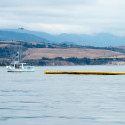
There have been two large scale oil spills over the past 4 decades in the Gulf of Mexico. The Ixtoc I spill in 1979 off the coast of Carmen, Mexico released 3.5 million barrels of crude oil into the Gulf, and the Macondo wellhead blowout off the coast of Louisiana, USA in 2010 released 3.19 million barrels of oil into the Gulf.
|
|
|
Responders to the Deepwater Horizon spill used large quantities of dispersant to facilitate oil biodegradation, but could a different method be safer for the environment?
|
|
|
Polycyclic aromatic hydrocarbons with high molecular weights (HMW-PAHs) are potentially toxic compounds that can cause genetic mutations. However, current environmental monitoring and analyses of human health risks only focus on the sixteen PAHs that the Environmental Protection Agency considers priority pollutants.
|
|
|
Posted on June 4, 2015
One of the most significant outcomes of the Gulf of Mexico Research Initiative (GoMRI) has been the fostering of a multi-disciplinary collaborative academic community ready to put science into practice.
|
|
|
Posted on June 13, 2014
Scientists from Texas, Delaware, and Louisiana conducted a multiyear study examining coastal waters in the Gulf of Mexico to determine if hydrocarbons from the Deepwater Horizon oil spill had changed the water column chemistry.
|
|
|
Posted on June 7, 2013
Scientists studying oil impacts on fish, shrimp, crab, and oysters from coastal Mississippi waters one year post-spill found PAH levels were below Levels of Concern (LOC)
|
|
|
Posted on June 6, 2012
A floating mass of tangled seaweed might not look inviting, but for marine life in open Gulf waters it is critical for survival.
|
|
|
Study Shows Marsh Response to Moderate and Heavy Oiling Over 3.5 Years
Response of salt marshes to oiling from the Deepwater Horizon spill: Implications for plant growth, soil surface-erosion, and shoreline stability. Lin, Q.; Mendelssohn, I.A.; Graham, S.A.; Hou, A.; Fleeger, J.W.; Deis, D.R. Science of the Total Environment, 2016, 557–558:369–377
Study Characterizes Esturine Material Circulation Rate
Time scales in Galveston Bay: An unsteady estuary. Rayson, M.D.; Gross, E.S.; Hetland, R.D.; Fringer, O.B. Journal of Geophysical Research: Oceans, 2016, 121, 4, 2268–2285
|
|
|
|
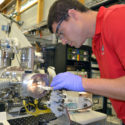
GoMRI RFP-V: Spectroscopy for Specific Isomer Determination of Petroleum Oil Spills (Campiglia)
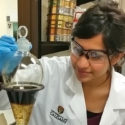
The A Combined Analytical and Synthetic Approach Based on Line Narrowing Spectroscopy for Specific Isomer Determination of Petroleum Oil Spills project is lead by P.I. Andres D. Campiglia, University of Central Florida. This project tackles a different aspect of PAHs analysis as it focuses on detection and characterization of higher-molecular weight PAHs (HMW-PAHs), i.e. PAHs with MW equal or higher than 302 g mol-1. The HMW-PAHs isolated from environmental and combustion-related samples exhibit mutagenic activity and petroleum transformation products from HMW-PAHs persist in the environment longer than their lighter counterparts.
|
|
The shows will broadcast at 9 PM (CST) on Biloxi, Booneville, Bude, Greenwood, Jackson, Meridian, Mississippi State, and Oxford stations. See the MBP TV schedule for details. Click here to request a screening near you.
June 24 Deadline to Submit a Scientific Session for the 2017 Oil Spill and Ecosystem Science Conference
View the session guidelines here. Objectives should focus on restoration and recovery, oil spill response and management strategies, human dimensions, ecological impacts, long-term fate and impacts, breakdown and transport, data management, and outreach and science communications.
Job Opportunity: LUMCON Seeks Postdoc in Phytoplankton Ecology
The position involves characterizing phytoplankton community composition and merging data to develop community analyses.
|
|
C-IMAGE Researcher Appears on University Beat TV
The program, a half-hour weekly segment produced by WUSF, recently invited Dr. Steve Murawski to share his thoughts on the post- Deepwater Horizon marine research and the spill’s lingering effects on the Gulf of Mexico. Check out Murawski’s clip here.
Get to Know CWC Scientist Anne Giblin
Dr. Giblin is a marine ecologist who is researching how oil exposure may impact and alter bacterial processes in sediments. Learn more about her research and reasons she became a scientist here!
Teacher-At-Sea Chronicles DEEPEND Cruise
Christia Hewlett was the official Teacher-At-Sea during the consortium’s most recent research cruise. She documented the equipment, experiences, and even the researchers on board for the DEEPEND blog. You can find all of her posts about the cruise here.
Pixar Event Features ECOGIG Scientist’s Research
Dr. Eric Cordes recently attended a “Science After Hours” event at the Franklin Institute promoting the upcoming Disney/Pixar film Finding Dory, where he discussed deepwater corals and shared information about shallow-water coral reefs. The Science After Hours program is an evening event series exclusively for adults 21 and over that includes experiments, demonstrations, and games curated by the museum.
Video Depicts How RECOVER Scientists Satellite Tag Mahi Mahi
Researchers fit spawning adult mahi with satellite tags desgined to record where the fish go and how fast they accelerate at different points. They will use this information to build a profile of mahi’s behavior during spawning and hope to expand their research to include mahi in the wild.
|
|
|
|
|
|
|