GoMRI eNews · May 3, 2016 · ← All issues
Welcome to the GoMRI eNews.
We have added links to GoMRI videos in the edition.
Look back at previous editions in our archives

Keeping you current on emerging Gulf science and the people investigating the effects of oil spills on the environment and public health.

May 3, 2016                                                                    GoMRI eNews

Stories

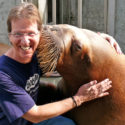
GoMRI Mourns the Passing of Dr. Stan Kuczaj

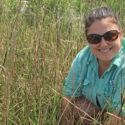
Grad Student Robinson Follows Little Blue Crabs for Bigger Food Web Picture

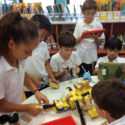
Ten Outstanding Education Products Six Years After Deepwater Horizon

Using Acoustics to Monitor Oil and Gas from Deep Natural Seafloor Seeps

From the Archives

Research on Dispersants that Informs Oil Spill Response

Posted on April 27, 2015
The prevention or reduction of coastline oiling was high on responders’ priorities immediately following the 2010 Deepwater Horizon oil spill. Five years later, much discussion continues about balancing benefits and risks regarding dispersants, and there are increased research efforts for alternatives or enhancements to existing dispersant systems.

GoMRI Science Teams among First Responders to Galveston Bay Oil Spill

Posted on April 22, 2014
On March 22, a cargo ship collided with a barge carrying approximately 4,000 barrels of bunker fuel oil in Galveston Bay, Texas. Within days scientists from two research consortia funded by the Gulf of Mexico Research Initiative (GoMRI) were on site alongside government and industry workers, collecting baseline information to assess impacts.

A New Flavor of Dispersant

Posted on April 30, 2013
Often misunderstood by the public, dispersants are the single biggest weapon in the arsenal of those combating an oil spill.

Research at Sea – Tracking and Identifying Oil across the Florida Shelf

Posted on May 1, 2012
Dr. Ian MacDonald with Florida State University (FSU) and Dr. Richard Snyder with the University of West Florida (UWF) have been leading a research team to track and identify oil in sediment and water samples since January 2011.

Publications

Study Documents Ixtoc-I Surface Oil Transport 
Surface oil footprint and trajectory of the Ixtoc-I oil spill determined from Landsat/MSS and CZCS observations. Sun, S.; Hu, C.; Tunnell Jr., J.W. (2015). Marine Pollution Bulletin, 101, 2, 632–641.

Study Analyses 20K Water Samples Using Gulf Science Data Water Chemistry Datasets
Spatial and temporal distribution of water column total polycyclic aromatic hydrocarbons (PAH) and total petroleum hydrocarbons (TPH) from the Deepwater Horizon (Macondo) incident. Wade, T.L.; Sericano, J.L.; Sweet, S.T.; Knap, A.H.; Guinasso Jr, N.L. (2016). Marine Pollution Bulletin, 103, 1–2, 286–293.

Data

Oiling conditions in coastal Louisiana after the Deepwater Horizon Oil Spill (May, September of 2010) 
Louisiana SCAT Shoreline Cleanup Assessment Techniques Oil Observation Database from May 2010 to September 2010

Compilation of pre-Deepwater Horizon sedimentary data measured throughout the Gulf of Mexico (1963-2011)
CARTHE: Historical stable carbon isotope (d13C) data from bottom sediments in the Gulf of Mexico (1963 to 2010)

Video

“Dispatches from the Gulf” is a new Journey to Planet Earth episode showing how scientists confront the challenges of the Deepwater Horizon oil spill. The documentary also investigates the impact of the event on the ecosystems and communities along the Gulf of Mexico.

Produced in conjunction with the Gulf of Mexico Research Initiative (GoMRI).

Announcements

Missed the Live Streams of Dispatches from the Gulf?
Information on future screenings of the documentary are available here.

Project Activities

C-IMAGE Story Collider Audio Available Online
Four researchers and a Tampa Bay Times editor participated in the Story Colliderevent to tell stories about their personal connections to science and the Deepwater Horizon oil spill. Listen to: Steve Murawski, Isabel Romero, Kendra Daly, Ernst Peebles, and Jim Verhulst.
 
CARTHE Scientist Explains LASER Experiment
Dr. Helga Huntley discussed the goals and research methods of the LAgrangian Submesoscale ExpeRiment (LASER) expedition in a recent interview and accompanying short clip for UD Daily, the University of Delaware’s online news source.
 
LADC-GEMM Reveals Data Management Strategy
Storing and archiving acoustic data can be difficult due to large volumes of data and the many stages of quality control and processing. Learn how LADC-GEMM plans to tackle these challenges as they enter their second year of acoustic research.
 
CWC Blog Debunks Science Myths
Leandra Darden’s recent post in the Marsh Edge-U-Cation Blog addresses five common myths and misconceptions about scientific research. You can read her entry here.
 
RECOVER Attends Ocean Kids 2016
Researchers and volunteers hosted a table at the event to introduce students and their families to RECOVER research. Ocean Kids is an annual event sponsored by the University of Miami Rosenstiel School that aims to excite and inspire at-risk children through the exploration of marine science and conservation.
 
DEEPEND Prepares Outreach for Third Trawling Cruise
Researchers set sail on April 30 for the consortium’s latest research cruise. Joining them is the new Teacher at Sea Christia Hewlett and Flat Stanley – a well-known children’s book character who will blog about and share photos of his experiences at sea. The consortium will also film onboard activities for two upcoming documentaries and for public and educational outreach.
 
CRGC Hosts Community Health Worker Training
The consortium recently hosted a Community Health Worker training course. They hope to deploy six Workers to Bayou La Batre, Alabama, and Plaquemines and Lafourche Parishes in Louisiana, where they will help connect residents in need with professional health services. You can learn more about Community Health Workers here.
 
CONCORDE Scientists Gather “Barneys” and “Boppers” for Research
Just 24 hours after completing the consortium’s Spring Research Campaign, the R/V Point Sur returned to the sea to retrieve scientific mooring equipment from around the northern Gulf. Check out this blog post to learn more about these tools and the researchers’ experiences.
 
ACER Sheds Light on “Denitrification”
The latest “Word Wednesdays” entry tackles a process in the nitrogen cycle called denitrification – the conversion of one form of nitrogen (typically nitrate or nitrite) to nitrogen gas.