GoMRI eNews · Mar 22, 2016 · ← All issues
Welcome to the GoMRI eNews. Check out the new Data Section in this issue.

Keeping you current on emerging Gulf science and the people investigating the effects of oil spills on the environment and public health.

March 22, 2016                                                                    GoMRI eNews

Stories

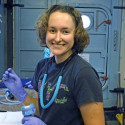
Grad Student Rogers Traces Gulf Oil as Scientific CSI

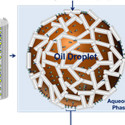
Creating Improved Dispersants and Delivery Systems for Oil Spill Mitigation

From the Archives

Five Years Later: The Effects Of The Oil Spill

Posted on March 19, 2015
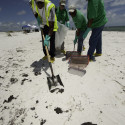
The five year anniversary of the Deepwater Horizon oil spill is less than a month away. Our beaches along the Gulf Coast are clean, but it's estimated some four to 10 percent of the oil is still on the bottom of the Gulf.

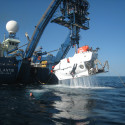
Scientists to Revisit Wellhead Site in Legendary Research Submarine

Posted on March 20, 2014
A team of scientists led by the University of Georgia’s Samantha Joye will spend much of April deep underwater, surveying the ocean floor around the Deepwater Horizon blowout that discharged roughly 5 million gallons of oil into the Gulf of Mexico in 2010.

The Tiniest Survivors

Posted on March 21, 2013
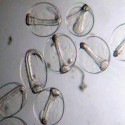
The bay anchovy is the most important fish you’ve never heard of. Why? Because greater than 95% of all eggs collected by scientists during summer months in coastal estuaries between the Yucatan and the Chesapeake Bay belong to that species.

Publications

Study Provides Improved Chemical Analysis for Oil Spill Investigations
Chemical composition and potential environmental impacts of water-soluble polar crude oil components inferred from ESI FT-ICR MS, Liu, Y.; Kujawinski, E.B.; Quigg, A. PLoS One, 2015; 10(9): e0136376

Study Characterizes Coral Health in Vicinity of Oil Spill
Coral injuries observed at mesophotic reefs after the Deepwater Horizon oil discharge. Silva, M.; Etnoyer, P.J.; MacDonald, I.R. Deep Sea Research Part II: Topical Studies in Oceanography, 2015, doi:10.1016/j.dsr2.2015.05.013

Data

Extraction and detection of toxicants from crude oil and tar balls
Dataset for: Efficient extraction and detection of aromatic toxicants from crude oil and tar balls using multiple cyclodextrin derivatives
 
Survey and subbottom profile on the West Florida Shelf to DeSoto Canyon September-October, 2013
Survey and subbottom profile, West Florida Shelf to DeSoto Canyon, 9-23-2013 to 10-3-2013 (WB 1405)

Announcements

These seminars will be streaming live so you can participate remotely.
  • April 6 in Austin, TX:  Chilling with your chums: How did the oil spill impact Gulf fisheries? Register here. More info here.
  • April 14 in Mobile, AL:  Where did the oil go? Register here.  More info here.
GoMRI eNews on Website
Sign up for the latest news and information about GoMRI research and activities delivered to your email address.  Archived eNews are available, too. Go to the GoMRI website, hover over the 'News & Events' tab, and click on GoMRI eNews Bi-weekly Updates.

Conference Outreach Workshop Report Available:  Sharing Oil Spill Science with Non-Scientists 
Missed the February 1st workshop in Tampa, FL? Catch up by reading the report here.  It includes the agenda, presenters' materials, and recaps of the breakout sessions.

Project Activities

ACER Explains Disturbance and Perturbation
The latest installation of the consortium’s Word Wednesdays series explains what scientists call a “disturbance” and how the term is related to other concepts such as “perturbation” and “stable state.”
 
ADDOMEx Highlights Women Scientists
The consortium will spend March featuring important female scientists of the past and present in honor of Women’s History Month. Check out their posts about NOAA’s first female Chief Scientist Sylvia Earle and influential environmentalist Rachel Carson.
 
Get to Know C-IMAGE Student of the Month Laura Gomez
Laura is a graduate student at Universidad Nacional Autónoma de México. Learn more about her path, her paleoceanography and paleoclimatology research, and the importance of her research to studying oil spills.
 
CONCORDE Researcher Documents Bonnet Carré Response Cruise
In this blog post, scientist Alison Deary chronicles her experiences collaborating with other GoMRI consortia to collect samples and deploy gliders in the spill area.
 
CWC to Host Field Technology and Engineering Camp
The camp will help students grades 9-12 gain practical experience with the technology and engineering that field scientists use to conduct coastal wetland research. Campers will work with programs such as Geographic Information Systems (GIS), learn effective use of a GPS, and help design and build scientific equipment. Register today!
 
News Station Interviews DEEPEND Researcher
Heather Judkins recently spoke with WTUL about deep water squid and how she hopes to uncover the possible relationship between the squid and recent changes in Mississippi Canyon sperm whale feeding habits.
 
DROPPS Highlights New Zooplankton Researchers
This blog post introduces the consortium’s three new post-docs and new Ph.D. student, who will be researching interactions between zooplankton and phytoplankton-bacteria in relation to oil exposure.
 
ECOGIG Researchers Help Boy Scouts Earn Their Badge
Consortium scientists and graduate students recently taught an oceanography class to twelve Boy Scouts for the Spring Boy Scouts Advance-A-Rama event in order to help them fulfill some of the oceanography badge’s requirements.
 
RECOVER Releases Final Video in UTMSI Series
Watch the clip to hear scientist Jacob Johansen describe how he uses “fish treadmills” to analyze how oil exposure can affect red drum’s swim performance.