GoMRI eNews · Feb 9, 2016 · ← All issues

Keeping you current on emerging Gulf science and the people investigating the effects of oil spills on the environment and public health.

February 9, 2016                                                                    GoMRI eNews

Stories

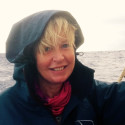
Cecilie Mauritzen is New GoMRI Research Board Member

GoMRI Mourns the Passing of Dr. George Ioup

Study Describes How Hurricane Isaac Stirred Up a Marine Snow Storm

Understanding How Deepwater Horizon Affected Fishing Community Decisions

From the Archives

Study Finds Ecofriendly Clay Delivers and Improves Oil Spill Treating Agents

Scientists assessed the use of clay particles in experiments to develop a new class of dispersant that is effective and less toxic than those used in the Deepwater Horizon response.

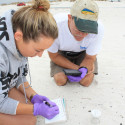
Oil Patty Research with Top Scientists Turns Students into Citizen Science Enthusiasts

Talk about compounding interest! Put together scientists and teachers who are passionate about their work with students who are eager to help with ongoing research and watch as excitement fuels student engagement, sparks career interest, and feeds enthusiasm of all.

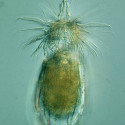
MEIOFAUNA: Getting Down in the Mud

Know what meiofauna is? Most people have to look it up. Stephen Landers, professor in the Biological and Environmental Sciences department at Troy University, focuses the majority of his research on the tiny invertebrates that populate the ocean floor,

Publications

Study Suggest Marsh Plant Is Indicator Species For Marsh Oil Spill Recovery
Recovery of salt marsh benthic microalgae and meiofauna following the Deepwater Horizon oil spill linked to recovery of Spartina alterniflora. Fleeger, J.; Carman, K.; Riggio, M.; Mendelssohn, I.; Lin, Q.; Hou, A.; Deis, D.; Zengel, S. Marine Ecology Progress Series, 2015, 536:39-54.
 
Study Provides Improved Chemical Analysis for Oil Spill Investigations
 
Study Details Sources, Concentrations, and Spatial Variability of Hydrocarbons Deposited on Seafloor
Hydrocarbons in Deep-Sea Sediments following the 2010 Deepwater Horizon Blowout in the Northeast Gulf of Mexico. Romero, I.C.; Schwing, P.T.; Brooks, G.R.; Larson, R.A.; Hastings, D.W.; Ellis, G.; Goddard, E.A.; Hollander, D.J. PLoS ONE, 2015, 10(5): e0128371.

Announcements

The Gulf of Mexico Research Initiative (GoMRI) is pleased to announce the development of the GoMRI Request for Proposals for 2018-2019 to fund research activities for GoMRI Years 9-10 (1 January 2018–31 December 2019). This RFP-VI, to be released in October 2016, will build on previous RFPs, will be the final research competition, and will only fund two-year awards.
 

Project Activities

CWC Announces “Connecting to the Marsh through Art” Workshop
Attendees of the consortium’s latest Gulf Lagniappe event will renew their connection to the marsh by translating field work into art – no scientific or artistic background needed! Details and registration instructions for the February 27th event are available here.
 
ACER Engages Local Teachers to Reach K-12 Students
The ACER Teacher Advisory Group is a team of local science teachers who will work with the consortium’s Educational Team to increase students’ interest in and understanding of the northern Gulf of Mexico.
 
CARTHE Webpage Features LASER Experiment
The LAgrangian Submesoscale ExpeRiment (LASER) now has its own home on the consortium website. For information about the experiment’s design and progress, visit the LASER homepage and check out the CARTHE blog.
 
ECOGIG Maps Naturally Occurring Gulf of Mexico Seeps
Researchers recently developed a comprehensive analysis Gulf oil and determined how much came from natural or Deepwater Horizon sources. They used their findings to map the locations of active natural oil seeps.
 
C-IMAGE Releases Two New Podcast Episodes
The Loop: Stories from the Gulf is Mind Open Media’s podcast focusing on the Gulf’s mud, microbes, and mammals post-Deepwater Horizon. Episodes 7 and 8, which focus on the Gulf’s big blowouts and C-IMAGE’s Ixtoc-I expedition respectively, can be heard here.
 
CONCORDE to Host Spring Teacher Workshop
The upcoming March 12th workshop will allow teachers to learn more about oil spill research’s current findings, interact with a consortium researcher, and develop future lesson plans focusing on Deepwater Horizon. You can review the agenda here and register for the event here!
 
DEEPEND Releases Deep Sea Amphipod Video
The short video depicts a small crustacean called an amphipod, which uses large claws to not only eat its prey but also use their resources to build a gelatinous home around itself. You can watch the video and read a bit more about amphipods here.
 
RECOVER Attends Surfrider Conference
Researchers recently attended the Surfrider Foundation’s 2015 Florida State Conference to discuss their research and answer questions about the post-spill fate of mahi-mahi and red drum. The Surfrider Foundation is a nonprofit that aims to protect the world’s oceans, waves, and beaches through a powerful activist network.