GoMRI eNews · Jul 14, 2015 · ← All issues
Help Share. Know three people interested in Gulf science? Please forward this email and share if you find it valuable.

Keeping you current on emerging Gulf science and the people investigating the effects of oil spills on the environment and public health.

July 14, 2015                                                                    GoMRI eNews

Stories

Study Estimates Carbon, Likely from Deepwater Horizon Spill, in Gulf Sediment

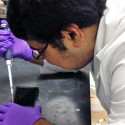
Grad Student Dasgupta Assesses Oil and Dispersant Toxicity to Fish DNA and Mortality

Video Presentations Available from the Gulf of Mexico Oil Spill & Ecosystem Science Conference

The Gulf of Mexico Research Initiative (GoMRI) has made available twenty-two video presentations from the 2015 Gulf of Mexico Oil Spill & Ecosystem Science Conference.

From the Archives

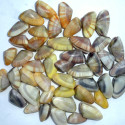
Study Finds Clams are Oil Indicator Species for Gulf of Mexico Surf Zones

Scientists from the University of West Florida found that Coquina clams could be used to detect biologically available oil in Florida surf zones.

Blue Crab Detectives Delve into Post-Spill Mystery

When Dr. Joe Neigel of the University of Louisiana Lafayette and Dr. Caz Taylor of Tulane University began examining data on the number of blue crabs in the northern Gulf of Mexico one year after the worst oil spill in history, they were expecting to see a reduction in the crab population.

Publications

Study Simulates Blue Crab Larvae Dispersal Patterns During Oil Spill 
Transport of blue crab larvae in the northern Gulf of Mexico during the Deepwater Horizon oil spill. Jones, B.; Gyory, J.; Grey, E.; Bartlein, M.; Ko, D.; Nero, R.; Taylor, C. Marine Ecology Progress Series, 2015, 527:143-156
 
Study Provides Insight into Hydrate Risk Management in Oil and Gas Pipelines
Hydrophobic particle effects on hydrate crystal growth at the water-oil interface. Cha, M.; Baek, S.; Morris, J.; Lee, J.W. Chemistry - an Asian Journal, 2014, 9, 261 – 267

Announcements

Oil Spill Seminar July 22 Temple, FL - Impacts of Oil on Coastal Habitats
The Gulf of Mexico Sea Grant Oil Spill Outreach Team and the Florida Department of Environmental Protection invite you to attend this seminar. Scientists will share their work on the effects of oil on salt marshes, wetlands, mangroves, and beaches.View the flyer.
 
Archived GoMRI Newsletters
View past issues of the bi-weekly GoMRI eNews here and of the quarterly GoMRI Public Newsletter here.

Project Activities

CARTHE Presentation Helps Prepare Scientists for Outreach
CARTHE outreach coordinators and the Smithsonian Marine Station recently presented an interactive session entitled “Looking to Net a Scientist? Tools and Tips to Recruit and Prepare Scientists for Education and Outreach” at the National Marine Educators Association Conference. The session topics included engaging students in complex scientific research using art and design.
 
DEEPEND Releases First “Squirt” Video
View the first animated feature of “Squirt,” the DEEPEND youth outreach program mascot. In this episode, Squirt introduces kids to counter-illumination. Stay tuned for more updates from Squirt as the project continues!
 
CONCORDE Invites Teachers & GoMRI Community to Remotely Join AUV Jubilee Webinars
Scientists will present daily briefings (July 13-17) as part of the Autonomous Underwater Vehicle (AUV) Jubilee. Teachers participating in a week-long workshop will attend briefings to help them develop classroom materials. Webinar space is limited. Interested individuals should contact Aaron Lamey Aaron.Lamey@usm.edu for log-in information. For research information, contact Ryan Vendermuelen ryan.vandermeulen@usm.edu. For education/outreach information, contact Jessie Kastler jessica.kastler@usm.edu. 
 
ECOGIG Researchers Show NOSB Winners Life as an Oceanographer
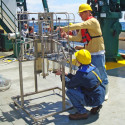
In April, scientist Vernon Asper treated this year’s National Ocean Science Bowl winners to an afternoon aboard the research vessel Point Sur. The students' experiences included deploying several pieces of oceanographic equipment.
 
ADDOMEx Undergraduates Build Roller Tables
Two undergraduate students are constructing equipment for the consortium’s upcoming roller table experiments. The roller tables will keep microorganisms in motion while researchers investigate marine snow formation with and without oil and dispersant. See their Facebook post.
 
LADC-GEMM Conducts First Research Cruise
From June 23-24, researchers conducted real-time acoustic data analysis and deployed five deep-water moorings and a Seaglider that will collect passive acoustic monitoring data near the Deepwater Horizon site. Read the Day One and Days Two and Three blogs and an Environmental Acoustic Recording System explanation by Sean Griffin.
 
CWC Holds H2O Water Monitoring Workshop for Teachers
Educators learned about water sampling and monitoring to teach students about Louisiana's water resources, watersheds, local environments, and their connection to the ocean. See pictures from the workshop here!
 
RECOVER Video Depicts Growth of Mahi Embryos
Mahi are some of the fastest growing fish in the ocean. The short time-lapse clip shows how rapidly a Mahi embryo grows in just 72-hours!
 
C-IMAGE Shares Ixtoc-I Images and Assessment
View images from a 1980 Mexican Petroleum Institute assessment report on the Ixtoc-I blowout. Researchers will collect and analyze sediment cores from the Campeche region near the blowout site.
 
Deep-C Grad Student Awarded NOAA’s John A. Knauss Marine Policy Fellowship
This fellowship will help GoMRI Scholar Alexandra Harper continue her advocacy work for responsible coastal and marine resource management and to participate in marine issues at the local, regional and national level. Congratulations, Alex!