GoMRI eNews · May 5, 2015 · ← All issues
Help Share. Know three people interested in Gulf science? Please forward this email and share if you find it valuable.

Keeping you current on emerging Gulf science and the people investigating the effects of oil spills on the environment and public health.

May 5, 2015                                                                    GoMRI eNews

Stories

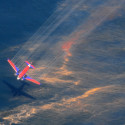
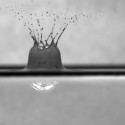
Research on Dispersants that Informs Oil Spill Response

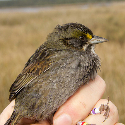
CWC Researchers Share Seaside Sparrow Data

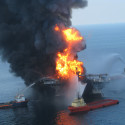
GoMRI Research Board in Memory of the Deepwater Horizon Blowout

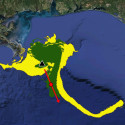
Research on Oil Transport that Informs Spill Response

If another oil spill were to occur in the Gulf of Mexico today, have there been scientific advances and new tools developed that could better inform response decisions? Have communication and collaboration among scientists and responders improved? Yes and yes.

From the Archives


GoMRI Advances Science Four Years after Deepwater Horizon Oil Spill

Since August 2011, eight research consortia funded by the Gulf of Mexico Research Initiative (GoMRI) have been working hard to understand impacts from and responses to the Deepwater Horizon incident.


A New Flavor of Dispersant

Often misunderstood by the public, dispersants are the single biggest weapon in the arsenal of those combating an oil spill.

Publications

Study Highlights Cascade of Microbial Processes Involved in Oil Degradation
Enhanced protein and carbohydrate hydrolyses in plume-associated deepwaters initially sampled during the early stages of the Deepwater Horizon oil spill. Ziervogel, K.; Arnosti, C. Deep Sea Research Part II: Topical Studies in Oceanography, 2013, online: doi:10.1016/j.dsr2.2013.09.003
 
Study Demonstrates Chemical Method to Analyze Oiled Louisiana Wetland Sediment
Linking ramped pyrolysis isotope data to oil content through PAH analysis. Pendergraft, M.A.; Dincer, Z.; Sericano, J.L.; Wade, T.L.; Kolasinski, J.; Rosenheim, B.E. Environmental Research Letters, 2013, 8 044038
 
Early Post-Spill Study Shows Initial Spatial Distribution and Concentrations of PAHs
Characterization of subsurface polycyclic aromatic hydrocarbons at the Deepwater Horizon site.  Diercks, A.R.; Highsmith, R.C.; Asper, V.L.; Joung, D.J.; Zhou, Z.; Guo, L.; Shiller, A.M.; Joye, S.B.; Teske, A.P.; Guinasso, N.; Wade, T.L.; Lohrenz, S.E. Geophysical Research Letters, 2010, 37, L20602

Announcements

The 6 pm seminar will be held at the University of Louisiana at Lafayette. Speakers will discuss toxicity of oil and dispersant mixtures and the development of alternative dispersants.
 
Monica Wilson with Florida Sea Grant gives explains how GoMRI is providing science-based information to people whose livelihoods depend on a healthy Gulf.

Project Activities

C-IMAGE Press Conference Video Highlights Oil Spill Research
Marking the oil spill's 5th anniversary, researchers talk about what they have been learning, what questions remain, and their upcoming plans for the next three years of research.

C-MEDS’ Keith Johnston Receives 2015 JCIS Darsh Wasan Award
The Journal of Colloid and Interface Science presents this award annually in recognition of outstanding research contributions. Congratulations, Keith!

CARTHE & The International SeaKeepers Society Team Up for Drifter Testing Expedition
The three-day expedition tested various types of drifters and their relative motion responding to wind, waves, and surface currents. Researchers will use data from these experiments to prepare for a large-scale project in early 2016 to study Gulf currents and water movement.

CWC to Host Mothers and Sons Workshop May 16
This day-long workshop provides hands-on learning about estuarine research on understanding impacts from the 2010 oil spill.

Deep-C Holds 3rd Annual ROV Competition
Dauphin Island Sea Lab hosted middle and high school student teams as they designed and built ROVs and competed against each other in a series of scientific missions. View the winning teams and pictures. 
 
DEEPEND Hosts Teacher Exploration Workshop
Thirteen teachers from Florida and Alabama (grades 6-12) spent the day learning about DEEPEND projects and classroom activities focused on bioluminescence, taxonomy, and DNA extraction.

DROPPS Highlights Five Years of Oil Spill Research
Scientists shared what they know now, unexpected outcomes, exciting discoveries, and their thoughts on industry use of their research.
 
ECOGIG Releases “ECOGIG Perspectives” Series
Five years after the oil spill, scientists and students reflect on the incident and their research that followed. Click here for The Role of ECOGIG Scientists in Deepwater Horizon Science,  What Scientists have Learned:  Part 1 and Part 2, and ECOGIG Students and Post Doc Experiences. 
 
RECOVER Consortium Launches Facebook Page
Keep up with RECOVER’s research and outreach activities through their brand new Facebook page. “Like!”