|
|
|
|
April 7, 2015 GoMRI eNews
|
|
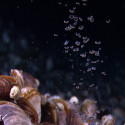
During the Deepwater Horizon incident, both oil and methane entered the surrounding marine environment from the Macondo reservoir. Scientists are investigating the released methane’s effects on deep-sea ecosystems.
|
|
|
How can communities build resilience to adverse events such as oil spills or hurricanes? A community’s ability to buffer or counteract stressors that disasters may cause or worsen depends on its people having and using social resources and networks.
|
|
|
University of California Marine Science Institute researcher Uta Passow investigated the formation of aggregated oil and organic material, commonly called marine snow, after the Deepwater Horizon spill.
|
|
|
The 2010 Deepwater Horizon oil spill occurred 1,500 meters deep in the Gulf of Mexico, releasing approximately 3.19 million barrels of oil.
|
|
|
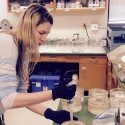
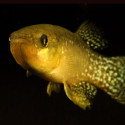
A team of researchers from Texas, Florida, and California successfully quantified the gene expression of wild Fundulus grandis, commonly known as Gulf killifish, from the northern Gulf of Mexico in assessing exposure to toxicants from the 2010 oil spill.
|
|
|
Experts from many fields of science have come together in an unprecedented manner to provide sound and trusted information.
|
|
|
Study Provides Overview of Microbial Hydrocarbon Degradation
Study Describes Functions of Dispersant Components
Study Investigates Genetic and Population Changes in Blue Crabs
|
|
This March event featured GoMRI-funded scientists Steven Murawski, Tracey Sutton, Kenneth Heck and Samantha Joye. The audience of 65 attendees included seafood representatives, natural resource managers, researchers, media, NGOs, representatives from Senators Wicker's and Cochran's offices, and others. Click here for photos (credit Mississippi-Alabama Sea Grant) and local news coverage WALA and WKRG.
Join CONCORDE for the Autonomous Underwater Vehicle (AUV) Jubilee in the Northern Gulf of Mexico, 11-21 July 2015
The University of Southern Mississippi, the Naval Research Laboratory and Rutgers University, are hosting the AUV Jubilee in the northern Gulf of Mexico. The mission of the AUV Jubilee is to conduct a coordinated field demonstration of ocean observing technologies focused in the northern Gulf of Mexico. High school science teachers will join in the cooperative effort to coordinate disparate individual ocean research efforts and characterize ocean processes in the Gulf. For more info, contact Ryan.Vandermeulen@usm.edu.
|
|
|
|
|
|
|