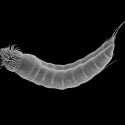
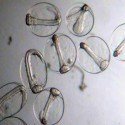
Scientists from Troy University and the University of Copenhagen, who are studying potential oil spill impacts on seafloor-dwelling marine life, examined microscopic invertebrates that live in the sediment (meiofauna).
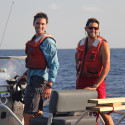
After the Deepwater Horizon oil spill, many Gulf residents wanted to know where the oil was going and how fast it would get there. Conor Smith is improving the accuracy and turn-around time of satellite-derived surface current velocity estimates for better ocean transport information.
Scientists funded by the Gulf of Mexico Research Initiative (GoMRI) are investigating the impacts of the Deepwater Horizon oil spill on the environment and public health and contributing to improved response technologies.
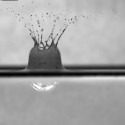
It was a tall order, but high school students rose to the challenge: they integrated physics, engineering, and scientific curiosity and created functional data-gathering drifters.
Oil Spill Science Seminar: Five Years Later, What Have We Learned?
In this seminar, which is free and open to the public, scientists will present the latest fisheries-related research about the impacts of the Deepwater Horizon oil spill and dispersant application on Gulf of Mexico habitats, communities, and individual species.
The EPA is accepting comments on proposed amendments to its plan to strengthen the Nation's preparedness level and response to oil spills. Comments are due April 22, 2015.
GoMRI Scholars Kristina Deak and Lindsey Dornberger at the University of South Florida received the James D. Watkins Award for Excellence in Research at the 2015 Gulf of Mexico Oil Spill & Ecosystem Science Conference. Read more about their award here.
This five-day camp immerses high school students in Louisiana marsh research. Participants will learn about technologies that are essential to field scientists. Application deadline is June 10, 2015.
The CARTHE team joined forces with the Dranoff 2 Piano Foundation and Miami-Dade County Public Schools to help students and teachers in a science-inspired poetry writing competition. See their video: Science+Poetry.
Samantha Joye at the University of Georgia was a speaker and judge at the 2014 Blue Oceans Festival's Go Explore Marine Science (GEMS), a program that connects youth to marine scientists and careers.
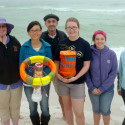
Gulf Oil Observers (GOO) students from Booker T. Washington Marine Science Academy conducted their 2015 oil patty beach sampling at the Naval Air Station in Pensacola, Florida.